
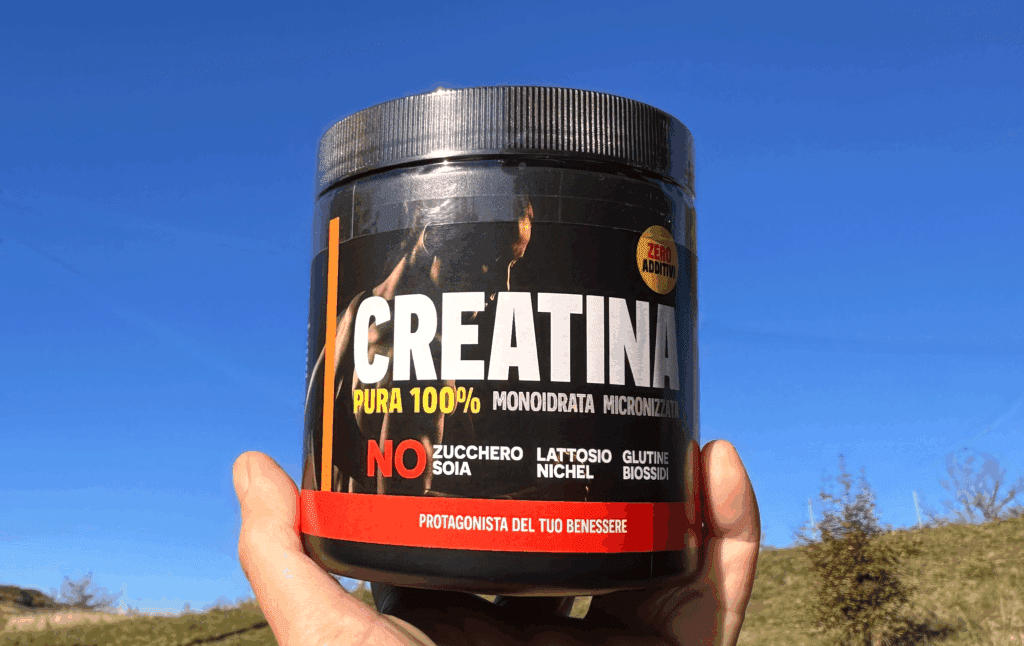
For many, creatine is a “gym” supplement.
It is actually one of the most studied, effective and versatile molecules in the field of human health and performance, and today science considers it a true ally of healthy aging.
What is creatine (really)
The creatine Is a natural compound consisting of three amino acids: arginine, glycine and methionine.
It is produced in the liver and brain, but most , about the 95%, is stored in the skeletal muscles, where it acts as rapid reserves of energy.
Within cells, creatine binds to phosphate, becoming phosphocreatine (PCr): an “energy buffer” that rapidly regenerates ATP, the true currency of cellular energy exchange.
In simple words: creatine is what allows muscles (and the brain) to endure, react, and recover longer.
Stronger muscles, younger metabolism
As we age, we tend to lose muscle mass, come on and features, a process known as sarcopenia.
It is one of the main factors limiting autonomy, balance and vitality in older people.
Numerous studies show that the combination of creatine and resistance training:
- increases lean mass by about 1-1.5 kg on average
- improves strength and muscle density
- reduces body fat percentage
- Improves performance in daily activities
And not only for those who are aging: even in youth or adulthood, creatine Enhances adaptation to training, improves recovery and promotes a more efficient metabolism.
Without muscle there is no longevity, and without creatine the muscle loses its energy reserve.
Creatine and bone: a hidden support
Few people know that creatine does not only act on the muscles, but also on the bones.
Bone cells (osteoblasts) use creatine for their metabolic functions, and preliminary studies indicate that supplementation may:
- increase osteoblastic activity
- improve the bone mechanical strength
- Promote more balanced remodeling
This makes creatine a possible Adjuvant in the prevention of osteoporosis, especially when combined with a regular exercise program and a diet rich in protein and micronutrients.
Energy for the brain as well
The brain, like the muscle, consumes enormous amounts of ATP.
And this is also where creatine comes in.
The most recent research shows that creatine supplementation can:
- improve attention, memory and mental alertness
- support the cognitive resilience In situations of stress or sleep deprivation
- protect neurons during aging or periods of high energy demand
It is not a “nootropic” in the classical sense:
is a direct donor of brain energy, which supports neuronal function where it is needed most.
Creatine, sleep and the brain: energy even when rest is lacking
The brain is the most energy-intensive organ in the body: it consumes about the 20% of the total ATP, while accounting for only 2% of body weight.
When sleep is lacking, this demand for energy remains high, but the ability to produce it decreases.
This is where the creatine.
During the sleep deprivation, brain phosphocreatine levels tend to drop, reducing the immediate availability of ATP for neurons.
Several studies have shown that creatine supplementation:
- attenuates the Decline in alertness, memory and reaction speed
- supports the cognitive function even after 24-36 hours without sleep
- improves the mental resilience and mood Under conditions of fatigue or prolonged stress
In practice, creatine does not “replace” sleep, but helps the brain to function better in energy deficit, like a backup battery that is activated when resources are scarce.
Neuroprotection and brain aging
In addition to improving acute cognitive performance, creatine appears to play a role in the long-term protection of neurons.
Neurodegenerative diseases, such as. Parkinson's, Alzheimer's, and ALS, Are characterized by:
- mitochondrial damage,
- chronic oxidative stress,
- And reduced ability to regenerate ATP.
In this context, creatine can act as a energy buffer and mitochondrial stabilizer, improving neuronal survival in experimental models.
In animal studies and small preliminary clinical trials, it has been shown to:
- Reduce dopaminergic neuronal loss in Parkinson's disease,
- Supporting mitochondrial function,
- and delay the progression of some motor dysfunctions.
Although clinical effects in humans are still being studied, the body of evidence suggests that creatine acts not only as an “energy” supplement, but as a modulator of neuronal bioenergetics - One of the keys to slowing brain aging.
Recovery and adaptation
After exercise, creatine accelerates the recovery of phosphocreatine reserves, reducing muscle fatigue and improving the ability to sustain repeated efforts.
But its most interesting effect is long-term:
stimulates the protein synthesis, cellular hydration and the activity of the satellite cells, which participate in muscle regeneration.
In practice:
Those who take creatine not only tire less but also rebuild better.
Safety: creatine is safe, but not all creatines are safe
After decades of research, the pure creatine monohydrate is considered one of the safest and most reliable supplements ever.
Long-term clinical trials (up to 5 years of continuous use) have not shown Alterations in renal, hepatic or cardiac function In healthy subjects.
Even in elderly patients or in experimental medical protocols, creatine has been shown to be Well tolerated and free of significant side effects, as long as it is used In standard doses (3-5 g per day).
But not all creatures are the same
Security, however, strongly depends on the purity of the raw material.
Products of low quality or from non-certified factories may contain:
- industrial solvent residues,
- toxic derivatives of chemical synthesis,
- o heavy metals such as lead, cadmium or arsenic.
These contaminations, even in trace amounts, can pose a risk in the long term, especially to the liver and kidneys, the organs responsible for detoxification.
In summary
Creatine is not just a sports supplement:
is a functional longevity molecule, capable of improving performance, preventing muscle and bone loss, and supporting the mind.
All clear?
As always, let's talk about it, I look forward to seeing you in the comments!
Thank you
Oliver
I remind you of the one I use routinely, CLICK HERE.!
Dear Dr. Tomasi, I would like to know if creatine should be taken daily or only on days when I go to the gym.
Silvia Molinese
Hello Oliver,
My daughter is 15 years old and plays volleyball. Can she safely take it at this age?
Before and after the activity?
Thank you
Good morning, Simona, 57 years old, menopausal, I purchased your ibro and I am in the 3rd week of the dietary plan. I want to switch to the low carb diet you so highly recommend, but I don't know which of your books I should buy... I'm a physical book reader, ebooks don't really excite me.
Thank you in advance for your response
Thank you, thank you
Is there an age limit? I am 82 years old and engage in light daily physical activity. Bodyweight exercises, dumbbells. I walk an average of 7 km a day. Thank you.
Can it be taken every day or only when exercising. .
Is it also recommended for those who do not engage in sports?
Complimenti per le spiegazioni accurate,aspetto tutte le fine settimana la notifica delle vostre mail😍…vorrei acquistare la creatina su Toplife…il dosaggio da prendere tutti i giorni?? È anche in situazione di “stress “??Lavoro su turni e tante volte non riesco a dormire abbastanza. Approfitto, potresti fare un post al riguardo?Cioè, chi fa lavoro notturno come si deve comportare??Grazie, buon lavoro
Good morning Dr., thank you for all the information you share with us, I find it very valuable.
To combat osteoporosis, what supplements do you recommend?
Thank you so much for all this precious information that enlightens those who desire a life lived to the fullest.
Warm regards, Paola Fulgenzi
Thank you so much for this valuable information.
Just bought it. And I can't wait to try it.
Article that goes into specifics without being boring; very clear and understandable.
Thank you
Good morning, it's not clear to me at what time of day to take creatine, and if I can take creatine and MAP at the same time.
Thank you for your response
Micol
Good morning, I would like to buy creatine. However, I already take vitamin D drops every day (1 drop) and collagen (bovine). I also take a pill every day (for 1 year) given to me by the gynecologist to stabilize my blood sugar (it was sky-high). I started the gym 1 week ago. I am 58 years old. Can we take creatine? Thank you very much.
Good morning, Oliver,
So, this product could also be taken by an 82-year-old insulin-dependent person with kidney failure?
Thank you.
Have a nice day
I don't know if I can hire you, I rely on you
64 years/ menopause at age 58
Hypercholesterolemia/arm lipid plus
Carotid plaque at 30./. Echo Doppler in one month for control
Triglycerides OK
No insulin resistance
High blood pressure/lacirex 4mg
HRT discontinued x lumpectomy (awaiting histology). Thank you
Good morning
Thank you so much for all the clear, detailed, and comprehensive information you provide. I truly value it.
Michela
I am 60 years old and have lost 22 kg by following a low-carbohydrate diet, along with regular physical activity such as walking and weight training. However, I have experienced a loss of muscle mass. I am currently taking MAP but am not seeing significant results. I would like to know if taking creatine instead of MAP would be more suitable for muscle growth, given that I understand the difference between the products and my daily protein intake is 95-100 g. I also want to know if prolonged creatine intake can affect creatinine levels in blood tests.
Thank you in advance for your willingness to provide an answer.
Before taking it, do you need to get blood tests done?
Thank you for this very interesting article. I've had it at home for a while but had many doubts about whether to take it or not because I don't train intensively. But given the benefits beyond constant training, starting today I will begin taking it. 3 grams per day.
Good evening, I've already purchased it, but I don't understand the quantity I should take, especially after physical exercise.
Is it based on weight?
Thank you,
Laura Corti
When do you recommend taking it? During a meal? It gives me a bit of bloating (I've been taking it for a couple of weeks).
Hi Annalisa, I've never received any responses. Honestly, I don't understand how this after-sales service works...
I wanted to ask if they responded to you.
Excuse me for bothering you, but I wanted to try and talk things over with someone.
Thank you very much.
Francesca
Good morning, Doctor,
I just had my blood tests done and my creatine level is 0.48.
The doctor says to stay calm... to tell you the truth, I'm not.
I do Pilates a couple of hours a week. I'm employed, so I spend many hours sitting.
I have annual check-ups because ten years ago I had surgery for malignant rectal adenocarcinoma. It was caught early, which allowed me to avoid any therapy.
My gut is not working well, and I help myself with magnesium.
I am asking you, can I take supplements such as creatine and magnesium that you suggest?
Thank you.
Good morning, Doctor,
I just had my blood drawn, and my creatinine level is 0.48.
The doctor says to stay calm... to tell you the truth, I'm not.
I do Pilates a couple of hours a week. I'm employed, so I spend many hours sitting.
I have annual check-ups because ten years ago I had surgery for malignant rectal adenocarcinoma. It was caught early, which allowed me to avoid any therapy.
My gut is not working well, and I help myself with magnesium.
I am asking you, can I take supplements such as creatine and magnesium that you suggest?
Thank you.