
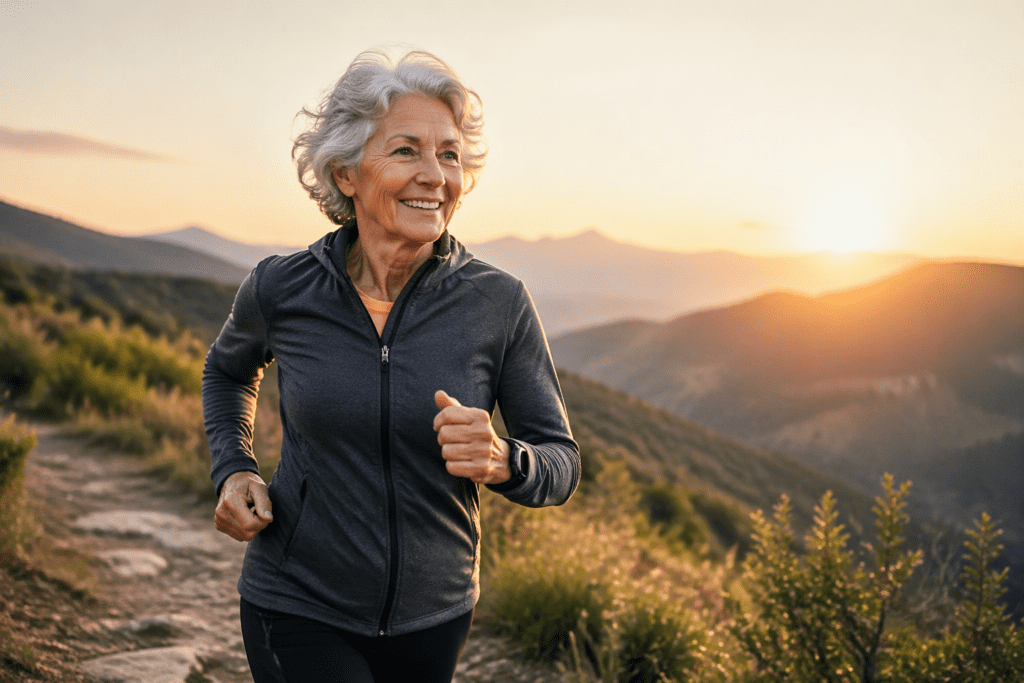
Aging: What it really is, why it happens, and what we can do to age better
For centuries, man has pursued the same illusion: Find a substance, a place, an elixir capable of stopping time.
One of the most famous legends tells of Juan Ponce de León, Spanish conquistador of the 16th century, who would explore the New World in search of the mythical Fountain of Youth. The story is, in all likelihood, largely fictionalized. His writings do not mention this fountain at all, and his expeditions had much more concrete objectives: gold, land, colonization, power.
Yet the fact that this legend has survived for so long says something very profound about us.
The idea that it exists somewhere A secret key to stopping aging is irresistible.
Because we all know, instinctively, what it means to age. We see it in our skin, our hair, the decrease in strength, the memory that sometimes falters, the body that recovers more slowly.
But for science to truly tackle a problem, it must first define it well.
So the real question is: What, exactly, is aging?
Aging doesn't just mean “looking older.”
The first image we associate with aging is often external: gray hair, wrinkles, less elastic skin, a different posture.
But these are just the visible signs.
There's much more going on beneath the surface.
As time goes by, the body gradually loses efficiency.
Women lose fertility up until menopause.
Bones become more brittle.
Muscles weaken.
The recovery speed is decreasing.
Hormones signal less well.
Mitochondria—the tiny organelles that produce ATP, our fuel for life—become less efficient.
Cells respond worse to stimuli.
In other words: aging is primarily a progressive loss of function.
It is not a disease in itself, butIt is the breeding ground for nearly all major chronic diseases.
The true face of aging: damage accumulation and reduced repair
From a biological perspective, aging can be viewed as the slow accumulation of cellular damage, coupled with a gradual decline in the body’s ability to repair it.
That is the key point.
Our body is not static.
Every day it causes damage and every day it repairs it.
Proteins that become damaged.
Mitochondria becoming less efficient.
Cell membranes oxidizing.
DNA undergoing small insults.
Metabolic waste products that accumulate.
When we're young, our bodies heal quickly, regenerate, adapt, and cleanse themselves.
Over time, this ability weakens.
Not because the body suddenly stops working.
But why is the balance between damage and repair slowly starting to shift in the wrong direction?.
This is why aging isn't an event, but a process.
Why do we age? An answer we don't like
Evolutionary biology is ruthless here.
Evolution isn't designed to make you live a long time.
It is designed to ensure the survival and transmission of genes.
If a gene causes death at age 10, it is quickly eliminated because the person is unable to reproduce.
If it causes death at 30 years old, it still tends to be negatively selected.
But if its effects manifest at 70 years old, after reproduction has already occurred, that gene can safely remain in the population.
In this sense, aging is profoundly natural.
And precisely for this reason, fighting it means, in a sense, going beyond nature, not just “following the natural course of things.”.
Nature isn't focused on your longevity.
It aims for genetic continuity.
Chronological age cannot be reversed, but biological age can.
There is a fundamental distinction here.
Chronological age (years on the calendar) is irreversible.
But physiological or biological age is another thing entirely.
Two 60-year-old people can have:
- completely different energy
- different cardiovascular risk
- different bone density
- Muscle mass
- different mental clarity
- different inflammation
In other words: we don't all age at the same rate, and this opens a huge door, because if the rate of aging varies, then there are factors that accelerate it and factors that slow it down. From infections to age-related diseases.
For much of human history, the main causes of death were infections: pneumonia, tuberculosis, gastrointestinal infections, influenza.
Today, at least in industrialized countries, the situation has changed radically.
The main causes of death are primarily:
- cardiovascular diseases
- Cancer
- type 2 diabetes
- Alzheimer's and other dementias
- kidney disease
- Osteoporosis and fragility
These pathologies have one thing in common: they grow with age.
Children almost never have heart attacks.
A twenty-year-old is unlikely to develop Alzheimer's.
Tumors become much more common after the age of 50.
For this reason, targeting aging means targeting the common ground on which many chronic diseases develop.
Inflammaging: The slow inflammation of aging
One of the most important concepts in modern aging biology is inflammaging.
The term unites inflammation and aging and describes a characteristic phenomenon of old age:
A chronic low-grade, often silent, diffuse, persistent inflammation.
It's not the acute inflammation of an infection or trauma, it's a slow burn.
This condition is favored by:
- accumulation of cell damage
- oxidative stress
- excess visceral adipose tissue
- insulin resistance
- sedentary lifestyle
- poor sleep quality
- Modern hyper-processed diet
This chronic inflammation wears down tissues, alters communication between cells, and sets the stage for many degenerative diseases.
The key role of autophagy: internal maintenance
If there's one concept that has revolutionized the way we think about aging, it's autophagy.
Autophagy is a process by which the cell:
- recognizes damaged or old components
- takes them apart
- they recycle
- free up space and material to build new and more efficient components
It is, in essence, a quality control system.
Just as a car needs to have its oil, filters, and worn-out parts changed, the cell also needs to continuously replace its components.
When this system works well, the damage is contained.
When you slow down, damage accumulates.
Autophagy is not a minor detail.
It is one of the pillars of biological longevity.
And the extraordinary point is that diet and lifestyle strongly influence this process.
Nutrition: not just fuel, but a biological signal
Hippocrates had already understood that nutrition was a cornerstone of health.
Today we know that food is not just energy or calories; it is also biological information.
Food choices can:
- increase or reduce inflammation
- Promote or hinder insulin sensitivity
- Support or block repair processes
- promote or curb the accumulation of damage
Once, the great danger was famine.
Today, in industrialized societies, the biggest enemies are often excess calories, hyperinsulinemia, visceral obesity, type 2 diabetes, and the continuous bombardment of ultra-processed food.
We have gone from scarcity to excess, but excess can be as deadly as scarcity.
Longevity does not mean living longer while sick; we need to be very clear about that.
No one wants to simply add years spent in frailty, dependence, or illness.
The real challenge isn't just extending lifespan, it's extending healthspan, that is, the duration of life lived in good health.
The goal is not to prolong old age, but to prolong biological youth.
More years with:
- energy
- lucidity
- autonomy
- muscle
- come on
- will to live
No more years of passive survival.
What accelerates aging today
Many modern factors work against us:
- continuous supercharging
- little or no movement
- Muscle loss
- disturbed sleep
- artificial night light
- chronic stress
- low-grade inflammation
- social isolation
- Over-stimulation and constant comparison
Aging faster, in most cases, is not a mysterious fate, but the result of an environment that continuously pushes the body out of balance.
What promotes healthier aging
If aging is the accumulation of damage plus a reduction in repair, then the logic is clear: we must reduce damage and enhance repair.
This means:
- Real, simple, non-ultra-processed nutrition
- Blood sugar and insulin control
- Regular physical exercise
- muscle mass maintenance
- deep sleep
- Natural light and consistent circadian rhythm
- Human relationships and existential purpose
- reduction of chronic inflammation
- activation of cellular maintenance processes such as autophagy
There isn't a fountain of youth, but there are dozens of biological levers that, when summed up over time, radically change how we age.
The final point
Aging isn't a switch that suddenly flips on, it's a trajectory.
Every day the body gets a little damaged, every day it tries to repair itself.
The direction we go depends, in large part, on how much we support this capacity for repair.
The real question then is not:
“How do I stop aging?”
The real question is:
“How do I live well enough to slow down damage accumulation as much as possible and preserve function?”
Why true longevity isn't about adding years to the last stretch of life.
It's adding life to years.
I'm reading you in the comments.
Thank you
Good morning Oliver! I am a 70-year-old lady and I am convinced that food is my best medicine! I always read your scientific comments with pleasure and agree with almost everything. I express myself this way because, having a scientific background (studies in biology and pharmacy), I think that one cause to be monitored more accurately is oxidative stress, especially psychological stress. I would be pleased to know how this damage is addressed biologically. .
Very interesting!!! I like how you express yourself clearly and understandably... I'm already trying to put some of your advice into practice... but deep sleep and stress elimination remain a dream!!!
Hello Oliver, your insights are always interesting. Slow inflammation struck me, because the way I am, that is, ’always forward”; I'll notice it when the problem is already bigger and more serious. Greetings to all of you.
Martina
Hello, I am a reformed obese person thanks to your advice (I lost 30 kg), I also have hypothyroidism and I can say I am happy with how I managed to lose weight and feel better with your timely help when needed. I am 67 years old and this article also updates me on my needs to continue eating in the best way for me (I also had breast cancer and I am a survivor). You are a beacon in the darkness of current medicine. Thank you.
Good morning, perfect presentation. A very pleasant and interesting read. I share the ultimate goal: to live as long as possible, but in good health. Thank you.
Mara
What you write is always interesting and clear. It's true that you can't do anything about your chronological age, but you can help your body to be well, or at least better, and not just settle. .
Good morning Oliver
I'm 67 years old, I did the keto and anti-inflammatory diet with your team, and I had incredible energy, along with gym and weight training. I took a very long trip to be with my son's family, and this time I can't seem to recover between the time difference and the flight hours. I've noticed that recovery gets much, much slower as you age. .
Thank you for your advice
Stefania
Absolutely aware. But unfortunately, due to serious family situations, I've lost sleep and energy... I'm 72 years old and I have to... I have to react. .
Thanks for these emails
This is a very enlightening path I'm on with you. A huge thank you for continuing to improve and advance through the years, with greater self-awareness and love, first and foremost for myself!
Thank you
Good morning,
Very, very interesting in-depth analysis.
Thank you
I am committed to following a healthy diet, as you constantly suggest.
However, I need suggestions and advice to help my 3 children (12, 13, and 17 years old) in a timely manner. They play sports, but like most kids, they are a bit picky about eating and love pasta.
Suggestions for healthy snacks to bring to school too?
Every morning I make them crepes adding more eggs, because otherwise they would go “on the cookies.”.
If you could give us moms “healthy” advice, that would be great.
Thank you for your work in our interest.
Have a nice day
Manuela
Good morning Oliver, truly very interesting, especially for me who fell dramatically in December 2025, with a diagnosis of stage 4 cancer, pylorus, duodenum, possible peritoneum.
I've always had great energy at 71 years old, with your Supermom following along.
Unfortunately, energy is very unstable today and I'm feeling a bit depressed.
I have to say that by following a carnivore diet and alternating with low-carb days, I'm managing to keep it together.
I don't feel like a warrior at all; I'm just a woman doing her best to live.
As of today, I've lost weight and muscle mass, but I really can't lift weights. I limit myself to long walks, earthing every morning, and natural light exposure. I sleep a lot and try to pace myself, resting when I feel the need.
Thank you for your articles!
With so much affection
Giovanna
Thank you Oliver
well-written
Interesting.
Little thing
Good evening Dr. Oliver, I assume the article is yours, and for that reason, I offer my congratulations.
Suggest and organize solutions.
In my past as a pharmacist, I've drawn and adopted my own conclusions.
Thank you, Oliver, you're always very precise and you remind us, just like your mother, that we need to steer a straight course through a thousand difficulties. Thanks, see you soon!
Good morning, Oliver,
Always clear and professional explanations, thank you.
Adding life to years is a concept I really liked and will make my own. Because, sometimes, the risk is to create stress in the pursuit of longevity, losing the focus of life: being careful about everything, filling days with planning to stay young... We weren't born just to stay young, but to live fully who we are. If every day we understand ourselves better and show it to others by sharing our human richness, we add life to our years, no matter how many there are.
And consequently, paying attention to the rest also takes on a different flavor.
Warmest regards.
Congratulations Oliver for the work you do continuously!
Buongiorno ho 71 anni vorrei sapere si possono prendere vari integratori insieme anche in estate