
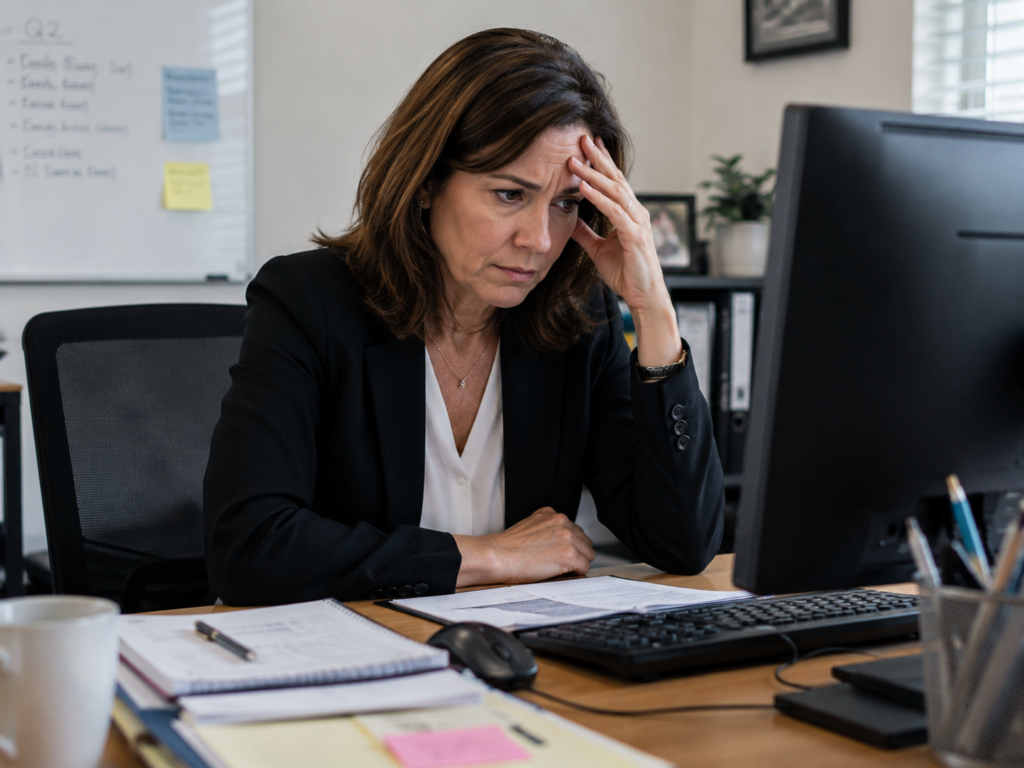
We live in a society that often leads us to seek a quick solution to complex problems. When we feel stressed, tired, irritated, with the disturbed sleep When you lack energy, the temptation is to immediately look for the “right” supplement.
The reality, however, is that No supplement can compensate for an unhealthy lifestyle.
If we really want to address the stress, We need to start with the basics of human biology.
Before supplements come:
• a diet based on real, nutritious food;
• The elimination or drastic reduction of ultra-processed foods;
• adequate daily protein intake;
• maintaining muscle mass through physical activity;
• quality sleep;
• respect for circadian rhythms;
daily exposure to natural light, especially in the early morning hours;
• reducing exposure to artificial light in the evening hours.
Our bodies have evolved over millions of years in the presence of natural light, movement, Simple foods and regular rhythms.
Today we often live the oppositeLittle sun, lots of screen time, insufficient sleep, processed food, and constant stress.
In this context, supplements should not be considered a shortcut, but rather tools that can support an organism already oriented towards health.
1. Ashwagandha: The most studied adaptogen
Ashwagandha (Withania somnifera) is probably one of the most studied adaptogens in the world.
Adaptogens are plant-based substances that help the body respond better to stressful stimuli.
Several clinical studies have shown that ashwagandha can reduce cortisol, improve stress perception, promote relaxation, and improve sleep quality.
It is particularly interesting in people experiencing chronic stress associated with mental fatigue and difficulty recovering.
2. Reishi: The Mushroom of Calm
The Reishi (Ganoderma lucidum) has been used for centuries in traditional Eastern medicine.
It is not a sedative and does not “turn off” the nervous system.
Many people report better sleep quality, increased recovery, and improved daily stress management.
This can be particularly helpful when stress and sleep disturbances feed off each other.
3. Magnesium bisglycinate: the anti-stress mineral
The magnesium participates in hundreds of biochemical reactions within the body.
Chronic stress, insufficient sleep, intense physical activity, and inadequate nutrition can increase the need for this mineral.
Among the different forms available, magnesium bisglycinate is probably one of the most interesting options for the nervous system.
Indeed, the glycine to which magnesium is bound has relaxing properties and promotes sleep.
A magnesium deficiency can manifest with:
• irritability;
• muscle tension;
insomnia;
fatigue;
• difficulty concentrating.
4. Vitamin C: Much More Than a Vitamin for the Immune System
When talking about stress, almost no one thinks of vitamin C.
Yet the adrenal glands, involved in the production of stress hormones, contain particularly high concentrations of vitamin C.
During periods of physical or psychological stress, vitamin C consumption increases.
Some studies have shown a reduction in cortisol response and improved tolerance to stressful events in people taking vitamin C.
Furthermore, vitamin C contributes to the protection of cells from oxidative stress and participates in collagen synthesis.
5. B Vitamins: Energy for the Nervous System
B vitamins play a fundamental role in energy metabolism and neurotransmitter production.
When the intake is insufficient, the following may appear:
fatigue;
• poor concentration;
• irritability;
• Reduced stress resilience.
Particularly interesting are the biologically active forms, such as methylfolate and methylcobalamin.
6. L-Theanine: Calm Without Sedation
L-theanine is an amino acid naturally found in green tea.
Its peculiarity is to promote a state of relaxation while maintaining mental clarity and concentration.
For this reason, it is often used in people who wish to reduce tension and nervousness without compromising productivity.
The conclusion
Stress isn't solved with a pill.
The true strategy consists of creating a metabolically healthy organism through real food, sleep, movement, natural light, and respect for our biology.
Only on these foundations can supplements express their maximum potential.
If I had to name five particularly interesting tools to support stress response, I would choose:
- Ashwagandha
- Reishi
- Magnesium bisglycinate
- Vitamin C
- B vitamins
Always remembering that The best supplement remains a lifestyle consistent with human physiology.
Don't forget, you're the star of your own health!
Love,
Dr. Tomasi
Landmark scientific studies
- Medicine (Baltimore)
- Authors: Lopresti AL, Smith SJ, Malvi H, Kodgule R
- Title: An investigation into the stress-relieving and pharmacological actions of an ashwagandha extract
- Year: 2019
- Summary: Randomized controlled trial that showed a reduction in perceived stress, anxiety, and cortisol in subjects treated with ashwagandha.
- BJPsych Open
- Authors: Bachour G et al.
- Title: Effects of Ashwagandha Supplements on Cortisol, Stress, and Anxiety Levels in Adults: A Systematic Review and Meta-analysis
- Year: 2025
- Summary: Meta-analysis of 15 randomized studies confirms a significant reduction in anxiety and stress with ashwagandha supplementation.
- Nutrients
- Authors: Boyle NB et al.
- Title: The Effects of Magnesium Supplementation on Subjective Anxiety and Stress: A Systematic Review
- Year: 2017
- Summary: Systematic review concluding that magnesium may be helpful in reducing symptoms of anxiety and stress in susceptible individuals.
- Cureus
- Authors: Rawji A et al.
- Title: Examining the Effects of Supplemental Magnesium on Self-Reported Anxiety and Sleep Quality: A Systematic Review
- Year: 2024
- Summary: Magnesium is particularly useful for mild anxiety and sleep disorders, especially in subjects with suboptimal magnesium status.
- Psychopharmacology
- Authors: Brody S, Preut R, Schommer K, Schürmeyer TH
- Title: A Randomized Controlled Trial of High Dose Ascorbic Acid for Reduction of Blood Pressure, Cortisol and Subjective Responses to Psychological Stress
- Year: 2002
- Synthesis: High-dose vitamin C reduced cortisol, blood pressure, and subjective response to psychological stress.
Salve vorrei risolvere il mio problema del sonno…..i primi due prodotti da lei proposti potrebbero aiutarmi….
I completely agree, in fact, ever since I started following you, my lifestyle has improved significantly and I feel great! Thanks, Doc!
Buongiorno Dottoressa un integratore per vampate stress sono in menopausa cosa consiglia?? Grazie ❤️
Seguo lei dottoressa da tanti anni e ho cambiato stile di vita evitando cibo spazzatura e mangio sano. Mi alleno in palestra prendo magnesio bisclicinato omega 3 creatina e mai. Ma da febbraio e questa parte ho tolto la pillola drovelis. Da sola perché ho 53 anni e sto andando in menopausa. Il ciclo era poco o niente. Da febbraio sto male. Dolori articolari e scheletrico, calcificazione alle spalle, formicolio alle mani il medico mi ha dato di fare dei accertamenti ma io sono convinta seguendo lei che tutto è causato da menopausa ma nessuno mi sente. Sto in cerca di un professionista bravo che mi ascolta e da reta. Sto in un stato pessimo, io che non mi fermavo un attimo tra allenamento lavoro e casa. Adesso non riesco a fare più niente per I dolori invalidanti da per tutto. Spero di trovare una soluzione e un bravo medico che mi ascolta.
Grazie per le preziose informazioni. Molto utili.
Da quando ho cominciato a introdurre i cambiamenti da lei consigliati nel mio stile di vita sto decisamente meglio.
Non tutto subito ma pian piano migliori..
Grazie ancora e buona estate!
Seguo i suoi preziosi consigli con buoni risultati e sono una fan dei vari tipi di magnesio proposti. Grazie 🙏
Dottoressa bravissima
Da quando la seguo ho migliorato la qualità della vita.
I suoi consigli sono preziosi
Articoli sempre chiari ed interessanti. Grazie!
Ho appena acquistato 2 confezioni di integratore Ashwagandha, posso assumerlo al mattino insieme alla pillola anticoncezionale o potrebbe alterarne gli effetti? Uso la pillola come transizione ij fase perimenopausa, non come anticoncezionale. Grazie Federica