
Dear Phoenicians,
in recent weeks we have talked a lot about menopause, hormones and female body changes.
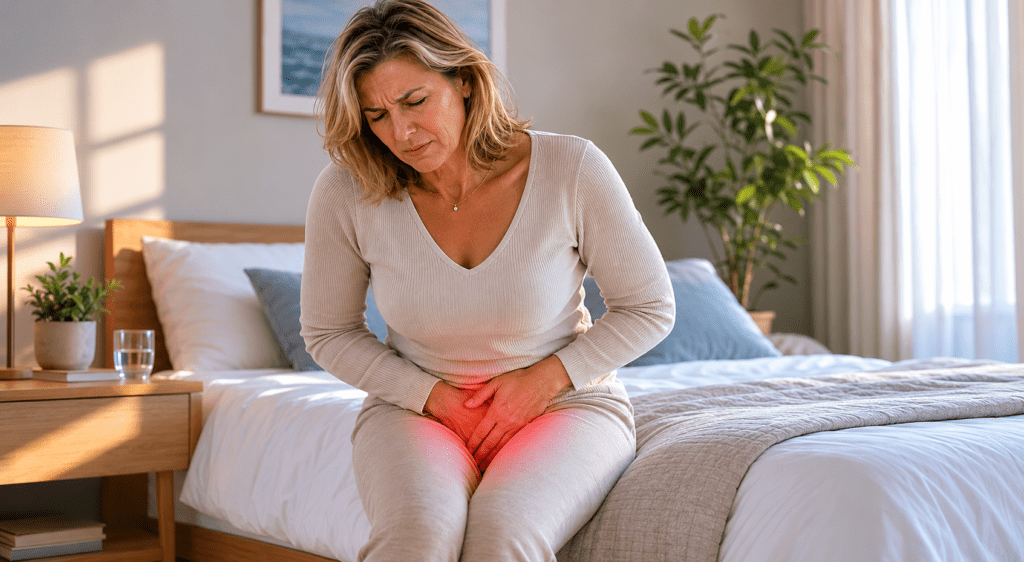
There is another issue that so many women suffer from, but which is still talked about too little today: the vaginal dryness.
Many women think it's “normal”, something to put up with with age, but it's not like that.
Down arrow
Why vaginal dryness is more than just an intimate annoyance.
It can mean burning, Pain during intercourse, irritation, recurrent urinary tract infections, loss of desire, everyday discomfort, and even feeling changed in one's body and femininity.
The good news?
Today we have many more therapeutic options than in the past, and it's not just vaginal estrogen.
In recent years, research has also studied the prasterone (DHEA/Intrarosa) and the tVaginal testosterone, with very interesting results.
Let's understand together, in a simple yet rigorous way, what we truly know today.
Down arrow
First of all: what is GSM?
The so-called GSMGenitourinary Syndrome of Menopause) affects almost one in two women after menopause, yet many continue to suffer in silence thinking it's inevitable.
With hormone decline, not only estrogen but also androgens such as testosterone cause the vaginal, vulvar, and urinary tissues to become thinner, less elastic, and less lubricated.
From here, they can appear:
- dryness
- burning
- pain during intercourse
- Urgency of urination
- recurrent cystitis
- loss of desire
- persistent annoyance in daily life
For years, we've been led to believe it was “just a matter of estrogen,” but in reality, vaginal tissues also respond to androgens, including testosterone, and this is precisely where the latest research is changing perspectives.
Down arrow
-
Vaginal estrogen
To this day, it is the most studied therapy with the most scientific evidence.
What do they do?
- they improve the thickness of the vaginal epithelium
- restore a more physiological pH
- promote the return of “protective” lactobacilli”
- Improved lubrication, pain during intercourse, and urinary symptoms
The most commonly used phrases in Italy
- Estradiol in vaginal suppositories or tablets
- Estriol in cream, gel, or suppositories
- Promestriene
- Conjugated estrogens cream
Down arrow
What does science say?
A large meta-analysis published in 2024 on Journal of Menopausal Medicine has shown significant improvements in:
- Vaginal pH
- trophism of tissues
- pain during intercourse
- quality of life
The good news is that at low vaginal doses, blood estrogen levels generally remain within post-menopausal ranges.
When can they be particularly useful?
When symptoms are predominantly local: dryness, irritation, pain during intercourse, and urinary issues.
It generally takes about 8-12 weeks to see the maximum benefit.
-
Prasterone (DHEA) – Intrarosa
Here we enter into one of the most interesting innovations of recent years.
Prasterone is the pharmaceutical form of DHEA, a hormone that our body produces naturally and which progressively decreases with age.
The difference compared to estrogens
Once inserted into the vagina, prasterone is locally transformed into both estrogens and androgens.
This means that:
- acts on both receptors present in the genital tissues
- The transformation occurs locally
- Blood levels of estrogen and testosterone generally remain in post-menopausal ranges.
What did the studies show?
The registration studies that led to EMA and FDA approval have shown:
- significant improvement in dryness
- pain reduction in intercourse
- Improvement of vaginal trophism
- vaginal pH reduction
But there's a very interesting aspect.
A more recent study has shown that prasterone can also increase elastin and the density of nerve endings in vaginal tissues — an effect that likely depends on the androgenic component.
When can it be particularly interesting?
- When dryness is accompanied by a drop in libido
when vulvar pain prevails
• when you want a very local action
In Italy, it is available as a 6.5 mg vaginal ovule for evening use, by medical prescription.
Down arrow
-
Vaginal Testosterone – The Great Unknown
It's probably the least known option, but also one of the most interesting in some selected cases.
In Italy, there isn't a registered industrial drug: it is prepared as a masterly compounded medication in pharmacies, following a personalized medical prescription.
Why can it work?
Why are the vulva, vestibule, and periurethral zone rich in androgen receptors?.
When testosterone levels drop, these tissues can also “suffer.”.
Vaginal testosterone acts directly on these receptors and a small amount is converted locally into estradiol.
The scientific evidence
One of the most cited studies was published in JAMA Oncology in women with breast cancer treated with aromatase inhibitors.
Result?
Improvement of:
- dryness
- pain during intercourse
- sexual quality
without clinically relevant increases in blood estradiol.
When is it considered?
- in women with a history of breast cancer
- When does a loss of desire prevail?
- when other therapies have not provided sufficient benefit
However, it must be said honestly: compared to estrogens and dehydroepiandrosterone (prasterone), vaginal testosterone has even fewer studies and fewer women enrolled in trials.
This must be followed by specialists experienced in menopause and female hormonal health.
Down arrow
How do you choose between the three options?
There isn't one single “best” therapy.
The choice depends on:
- type of symptoms
- Medical history
- Any oncological history
- personal preferences
- tolerability
- response to previous therapies
In general
- “Pure” dryness → vaginal estrogen
- Dryness + decreased libido → prasterone or testosterone
- Oncological situations → multidisciplinary assessment with an oncologist and gynecologist
And non-hormonal options?
They remain very important, especially for those who cannot or do not wish to use hormones.
Among the most used:
- Vaginal hyaluronic acid
- Vaginal moisturizers
- lubricants
- Vaginal lasers (in expert centers)
- ospemifene oral
Many women also benefit from combining multiple strategies.
In summary: 6 things to remember
- Vaginal dryness is not something you just have to live with.
- Today, more effective and customizable therapies exist.
- Vaginal estrogen remains the therapy with the most scientific evidence.
- Prasterone acts on both estrogen and androgen receptors.
- Vaginal testosterone can be useful in selected cases.
- Non-hormonal options can also provide very important benefits.
Down arrow
One last important thing, Phoenicians!
 You don't need to be ashamed of talking about these symptoms.
Vaginal dryness isn't “in your head,” it's not something to suffer through in silence, and it doesn't mean you're “aging badly.” It is a real biological change, related to hormones and tissues and above all: Today we have tools to feel better..
Inform yourselves, ask questions, seek professionals knowledgeable about menopause and female hormonal health.
Why feeling good even after 40, 50, or 60 is not a luxury, it's a right.
Primary scientific sources
Vaginal estrogens
- Rahn DD et al. Vaginal estrogen for genitourinary syndrome of menopause: a systematic review. Obstetrics & Gynecology, 2014 (PMID: 25415166).
- Ali ES et al. Efficacy of intravaginal estrogens on the management of vulvovaginal atrophy: a meta-analysis. Journal of Menopausal Medicine, 2024 (PMID: 39315501).
- Paraiso MFR et al. VeLVET Trial. Menopause, 2020 (PMID: 31574047).
- Bhupathiraju SN et al. Vaginal estrogen use and chronic disease risk. Menopause, 2018 (PMC6538478).
Prasterone (DHEA / Intrarosa)
- EMA — Summary of Product Characteristics Intrarosa (prasterone 6.5 mg).
- Pivotal Phase III studies ERC-231 and ERC-238 (Labrie et al., Menopause).
- Beneficial Effects of Vaginal Prasterone on Vaginal Histology in GSM. Journal of Sexual Medicine, 2023.
Vaginal testosterone
- Melisko ME et al. Vaginal Testosterone Cream vs. Estradiol Vaginal Ring in Women Receiving Aromatase Inhibitors. JAMA Oncology, 2017 (PMID: 27832260).
- Witherby S et al. Topical testosterone for breast cancer patients with vaginal atrophy. The Oncologist, 2011.
- Genitourinary Syndrome of Menopause: Recommendations from the Fifth International Consultation on Sexual Medicine (ICSM 2024). Sexual Medicine Reviews.
Guidelines and Recent Revisions
- Hormonal Treatments and Vaginal Moisturizers for GSM: A Systematic Review. Annals of Internal Medicine, 2024.
- AUA/SUFU/AUGS Guideline on Genitourinary Syndrome of Menopause.
- ACOG — Treatment of Urogenital Symptoms in Individuals With a History of Estrogen-dependent Breast Cancer, 2021.
- Therapeutic Choices for Genitourinary Syndrome of Menopause in Breast Cancer Survivors: A Systematic Review. Pharmaceuticals (MDPI), 2023.
With affection, yours
Dr. Tomasi
18 Responses
Leave a Reply
Thank you, you've touched on my problem!
I'm using a gel that my gynecologist prescribed. Let's see if it helps now…
It's all true... Unfortunately, I've been struggling with this problem for 10 years, ever since I went through menopause. I haven't had intercourse with my husband for 10 years... precisely because of the excruciating pain during sex... I had vaginal laser treatment and spent a lot of money but without significant results... Can you help me?
Thank you, very clear and useful!!
Always very interesting and educational topics. A pleasure to always learn and read to deepen my knowledge! Thank you
Dear doctor, I am taking Colpogym twice a week for vaginal dryness, and it's a bit better, but perhaps I should also use a cream... what do you think? Regarding intercourse, laser treatment seems very expensive and not permanent...
Good morning, Dr. Tomasi. Thank you for addressing these very important topics and for all the valuable insights I'm gaining from your expertise.
Warm greetings
Marzia Magnanini
Thank you, Doctor, for your continued information. It makes us less ignorant and more aware of our bodies.
Regarding Intrarosa... I stopped taking it for a long period. In your opinion, can I resume it without going back to the gynecologist? I don't have vaginal dryness or anything else, and I am 68 years old. I hope to meet you in person one day... thank you again
The doctor is absolutely right about the problem of vaginal dryness. In the past, a gynecologist prescribed me Lubrigyn suppositories, but unfortunately, they didn't yield great results. Subsequently, I consulted a specialist in Genoa who prescribed me compounded testosterone. This therapy proved effective, but due to the financial strain of the visits and the cost of the preparation at the pharmacy, I had to discontinue it. My intention is to resume the treatment regularly starting in September. Sincerely.
Good morning, Doctor. I am 60 years old and I have vulvodynia. I have pain during intercourse, but otherwise I am fine. Any advice?
Vaginal stretching, pelvic floor exercises I am doing...
Thank you and have a good weekend
Carmen
Good morning, doctor. Thank you for all the advice and precious information you give us.
You are an important benchmark!!!
I am using DHEA, as you recommended, doctor; my urinary problem has improved
Thanks again
Good morning, I have breast cancer with a total mastectomy and I'm still taking anastrozole after 16 years on my oncologist's advice. I have all the problems associated with the medication, but the most painful one is vaginal dryness, and no one, not even my gynecologist, has ever advised me on anything in this regard. But do we always have to take care of ourselves? I've started following your advice, and my life has changed for the better. Thank you.
Io problema simile, non posso assumere ormoni. La mia oncologa mi ha consigliato il laser Monnalisa touch, mi ha aiutata moltissimo, insieme a ovuli e creme, ovviamente senza ormini!
Good morning, doctor!
Heart disease, coronary dissection, 2 heart attacks and 1 pseudoaneurysm.
I tried a compounded prescription prescribed by the doctor. I was doing very well with it.
But alas, the cardiologist disagreed, perhaps he wasn't sure because it was outside his field.
In your opinion?! Alternative?!
I'm already using hyaluronic acid. But it's not the same thing.
Thank you, doctor!
Hello Doctor, thanks a million for this information, which not even the gynecologist tells us. I don't know if it's possible, but can you recommend some valid products? There are so many, and you never know if they're good.
With gratitude
Laura
Having you as a reference in opening our minds to knowledge and awareness is a grace... we are in total disarray regarding health, with you we are starting to ask, listen, and practice to then understand what needs to be done... thank you very much... the big problem is finding good and passionate professionals like you... rare gems... A thousand thanks.
Dr.
Buongiorno. Da farmacista consiglio alle mie clienti ovuli con estrogeni e prasterone, naturalmente le mando dal medico di base per la ricetta e praticamente sempre, il medico non ha niente da obiettare e fa la ricetta. Poi le clienti tornano a ringraziarmi. Io personalmente ormai da 10 anni in menopausa, ho cominciato a prendere ormoni vegetal origin per bocca, preparati in farmacia e su ricetta della mia ginecologa e sto meglio.
Dottoressa, lei e’ il mio faro. Non finiro’ mai di ringraziarla per la fo-informazione che ci regala. Sono appena stata dal ginecologo e mi ha presctityo il Prasterone Deha inntrasosa.
secchezza vaginale e dolore nei rapporti in menopausa ho 60 anni e non so che fare, cosa mi consiglia di risolutivo? grazie e saluti