
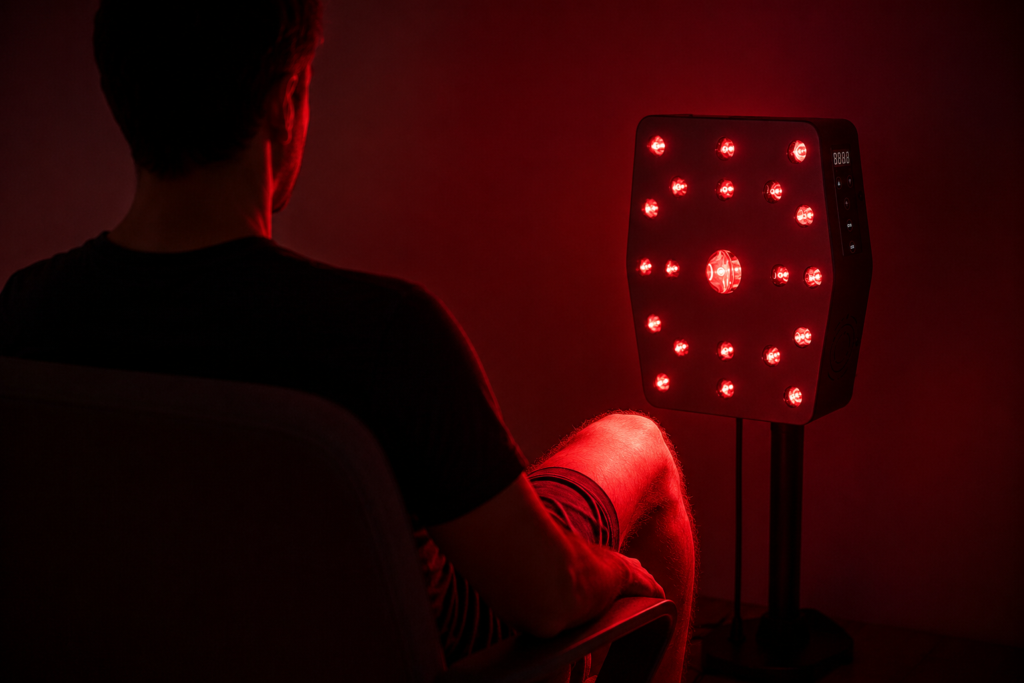
Photobiomodulation
When light speaks to mitochondria
The real benefits of red and near-infrared light, and the most promising frontiers
Most of the light we encounter does two things: illuminate, or heat. The sunlight tans (and overexposure damages), a lamp heats.
However, there is a particular band of the spectrum, that of the Red and near-infrared light, which does something more curious: is absorbed inside our cells, from the machinery that produces our energy. It doesn't heat, it doesn't tan, it doesn't damage DNA like ultraviolet does. Speak, literally, to the mitochondria.
Is this the principle of photobiomodulation. And it's worth recounting well, because it's one of those technologies where the underlying physiology is truly solid and fascinating, and where distinguishing what's documented from what's promising makes all the difference.
🔴 🔴 🔴
Photobiomodulation“
The name says it all: photo (light), Biography life, modulation (fine-tuning). It is the use of specific wavelengths of red and near-infrared light to modulate cell activity. Unlike surgical lasers, nothing is cut or burned here: the intensities are low and the light does not significantly increase tissue temperature. And unlike ultraviolet light, these wavelengths do not have carcinogenic or mutagenic properties.
We are working on two “windows” that act at different depths:
- the red light, around the 630-680 nanometers, which penetrates a few millimeters and acts primarily on the skin.;
- the near-infrared light (NIR), around the 810-850 nm, which penetrates deeper (up to several centimeters) reaching deeper muscles, joints, and tissues.
This is why many devices combine the two: they work together, at different layers.
🔴 🔴 🔴
The mechanism: inside the mitochondrion
Here is the heart of the story, and it has a single protagonist: an enzyme called cytochrome c oxidase, the last link in the chain that, inside the mitochondria, produces ATP, the energy currency of every cell.
This enzyme has a unique feature: it is the main “receiver” of red and infrared light. It is the antenna that captures those photons. And what happens next is elegant.
When a cell is in distress (inflamed, stressed, poorly oxygenated), it produces an excess of nitric oxide, which wedges itself right where oxygen should bind to the enzyme and blocks it, like a stopper. Result: ATP production slows down, reactive oxygen species accumulate, and inflammation is triggered. The cell “suffocates” from an energy perspective.
The red and infrared light, absorbed by the enzyme, Take off that cap. And in one fell swoop, three things happen:
- the enzyme starts working again and the ATP production resumes and the cell recovers energy;
- the released nitric oxide enters the circulation vasodilation and improved microcirculation, thus, more oxygen and nutrients to the tissues;
- the transient release of reactive oxygen species functions as signal, activating a cascade of cellular pathways that culminate in the release of growth factors and an anti-inflammatory effect.
In one sentence: light doesn't add energy from the outside, but removes a brake, allowing the mitochondrion to return to optimal function.
There's an elegant corollary to all this: if the mechanism involves releasing an enzyme held back by cellular stress, light tends to help the tissues that need it most the most—inflamed, fatigued, repairing, or aging ones. Light gets where it's needed, when it's needed.
🔴 🔴 🔴
The best-documented benefits
Skin and collagen. It is the most studied application, and the results are evident: randomized clinical trials with blind evaluation have shown a reduction in wrinkles and skin roughness and a measurable increase in collagen density, confirmed with ultrasound and biopsy. With age, collagen and elastin decrease; red light stimulates fibroblasts, the cells that produce them, and improves skin microcirculation, also supporting the healing of scars and minor wounds. It is, in summary, one of the most mature and well-established uses.
Hair. Low-level light/laser devices are authorized by the FDA in 2007 for androgenetic alopecia, and several meta-analyses of randomized trials confirm a significant increase in hair density compared to placebo.
Muscle recovery and performance. By increasing available ATP and improving oxygenation, red and infrared light can accelerate recovery, reduce fatigue, and alleviate exercise-induced muscle micro-damage. This is one reason for the growing interest in the sports world.
Joints, pain, and inflammation. A 2024 systematic review supports improvements in pain and function in osteoarthritis, with the strongest evidence for knees and hands; near-infrared light reaches deeper joint tissues. On the skin, the anti-inflammatory effect also translates to documented benefits for acne.
Microcirculation. The nitric oxide released dilates blood vessels and improves local blood flow: more oxygen and nutrients reach the treated tissues, and waste products are removed more quickly. This is a broad-based effect that supports many of the others.
🔴 🔴 🔴
Promising frontiers
And then there is an entire research front where the The theoretical mechanism is solid and fascinating, even though human studies are still in the early stages. We cannot make any concrete promises at this point, but we can look to the future with informed optimism.
Brain, mood, and cognition.
Near-infrared light penetrates the scalp and skull and reaches the cortex: this is the basis of so-called transcranial photobiomodulation, today studied as possible support for memory, attention, mood, and stress resilience. The rationale is consistent: neurons are extremely energy-hungry cells, and cytochrome c oxidase is found everywhere in the brain, and the first pilot studies on humans are encouraging. It is an area to follow with interest, rather than a promise already fulfilled.
Eyes.
The retina is one of the tissues richest in mitochondria in the entire body. This leads to a reasonable hypothesis: a more efficient electron transport chain could support retinal cell function, especially as we age. Some preliminary studies using red light at 670 nm point in this direction
Sleep and circadian rhythms.
Unlike the blue light emitted by screens in the evening, which suppresses melatonin and disrupts the ability to fall asleep, red light does not have the same disruptive effect on the sleep-wake cycle. Many enthusiasts incorporate it into their evening routine for this very reason: they use red-light lamps just like regular lamps, and it feels almost as if there were no electricity and they were lighting a fire.
The common thread running through all these frontiers is the same: more available cellular energy theoretically means better-functioning tissues. It's a promising idea, and research in the coming years will tell us how far it truly goes.
🔴 🔴 🔴
The Right Amount: More Isn't Better
This is perhaps the most important concept to understand, and the one that distinguishes intelligent use from useless use.
Photobiomodulation follows a biphasic dose response (in jargon, the Arndt-Schulz law): the relationship between the amount of light and its effect is not a straight line, but a inverted U-curve. Too little light triggers nothing; the right dose produces a benefit; and an excessive dose negates the effect, or at very high levels can even be counterproductive.
This is the opposite of the “the more I do, the better” mindset. There is an ideal window, which depends on the tissue, the depth, and the goal. That’s why the distance and duration of each session aren’t just details—they’re part of the treatment: overexposure in a single session doesn’t speed up results; if anything, it makes them worse.
However, be careful not to confuse two different things. “More is not better” concerns single session dose, Not how many times a week you expose yourself. A measured session every day It's not an excess at all; in fact, for the best benefits, daily use is the most recommended approach, because the Consistency is the factor that matters most.. In summary: don't overdo it in a single session (and with very powerful devices, keep sessions short), but don't fear frequency: daily regularity is a value, not a risk.
🔴 🔴 🔴
How to use it, objective by objective
A premise that is worth more than any table: The exact numbers depend on your device's power (irradiance, in mW/cm²). A powerful source reaches the useful dose in a few minutes; a weaker one requires longer sessions or a shorter distance. The indications below are approximate; your device's manual remains the precise reference. A universal principle: light works best on bare skin, because fabrics and clothes absorb and scatter photons.
|
Objective |
Wavelength |
Distance |
Duration by zone |
Frequency |
|
Skin and face(collagen, tone, wrinkles) |
Red, ~630-680 nm |
Contact mask, or panel at ~15-30 cm |
5-15 minutes |
3-5 times/week to daily |
|
Hair Density |
Red, ~650-660 nm (some add NIR) |
Close-up panel (~5-10 cm) or dedicated helmet/comb |
10-20 minutes |
From 3-4 times/week to daily |
|
Muscle recovery |
Near-infrared, ~810-850 nm |
4-8 inches |
10-20 minutes |
Daily, or 3-5 times/week |
|
Joints, pain, inflammation |
Near-infrared, ~810-850 nm |
Close, ~10-20 cm, on the area |
10-20 minutes |
Acute daily (1-2 weeks), then 2-3 times/week |
Two practical rules that span the entire table: red light works on the surface (skin, hair), near-infrared works on depth (muscles, joints); and The closer the device, the shorter the session needs to be. Consistency counts more than intensity: regular and measured sessions are better than a few “abundant” sessions.
A clarification on haira helmet is not necessary for contact; a panel held close works very well (and with good power, it delivers even more light to the scalp than many LED helmets). The important thing is separate the hair with fingers or a comb, so that the light truly reaches the scalp, and focus on thinning areas. Dedicated devices are no longer more effective in themselves: they are just more convenient and uniform, which helps to be consistent in the months it takes to see results.
🔴 🔴 🔴
What if I have exercise-induced inflammation: elbow, knee, back?
Yes, you can apply the light directly on the affected area, and more frequently, choosing near-infrared, which reaches muscles, tendons, and joints. In the acute phase, you can do daily sessions for about one to two weeks, then scale up to a maintenance of 2-3 times per week.
However, one distinction is important, and it is precisely this one that makes the difference between helping and hindering:
- For Pain and inflammation of soft tissues (tendinitis, sore joint, tired muscle, lower back tension) you can be relatively generous: near-infrared, on the area, even daily in the acute phase.
- For a Open wound or damaged skin quite the opposite: Less is morelow doses of red light and short sessions. Exceeding certain thresholds on healing tissue can slow it down. The instinct “the more I do, the faster it heals” is exactly the mistake that biphasic response teaches us to avoid.
And in any case, for a serious injury: significant swelling, suspected fracture, pain that doesn't improve, seek medical or physiotherapy advice first. Light therapy is a supplement, not a substitute for proper injury management.
🔴 🔴 🔴
In summary
Photobiomodulation is not a panacea, it is a technology with serious physiological bases, with a core of applications: skin, hair, Muscle recovery, joints, microcirculation, genuinely supported by evidence, with fascinating frontiers yet to explore in the brain, eyes, and sleep. Used consistently and with the right parameters, it is a concrete tool for those who want to take care of their body consciously.
🔴 🔴 🔴
Frequently asked questions
Does it hurt? Do you feel anything? No. It's not painful and doesn't get uncomfortably hot: at most, you'll feel a slight warmth. It's not invasive and doesn't require recovery.
When will the results be seen? It depends on the goal. For recovery and pain, some notice something after just a few sessions; skin and hair are much slower: weeks for skin, months for hair, because collagen and follicles respond in their own time. Consistency counts more than anything else here.
Can I use it every day? Yes, and indeed for the best benefits, daily use is the most recommended approach: regularity is the factor that matters most. The only thing not to overdo is the dose of a single session, not the frequency; with very powerful devices, it's enough to keep the sessions short.
Red or infrared: which to choose? It depends on the depth of the target. Red light (~630-680 nm) works on the surface, therefore on skin and hair; near-infrared (~810-850 nm) penetrates deeper and reaches muscles, joints, and deep tissues. Many devices combine both wavelengths precisely to cover more targets.
Does it work through clothes? Little: Fabrics and clothes absorb and disperse a good portion of the light. For skin, and even more so for deeper muscles and joints, bare skin is clearly more effective.
Can I combine it with skincare? It's best to have the session on clean, dry skin so that nothing filters the light; serums and moisturizers are applied afterward. However, be careful with photosensitizing active ingredients (like retinoids or some exfoliating acids): it's best not to have them on your skin during exposure, and to use them at another time of day.
Should I protect my eyes? Protective eyewear is not necessary for normal use. The sensible thing to do is simply not to point the device directly into your open eyes at close range; a session on your face is sufficient. keep your eyes closed, because the eyelid blocks out a lot of the light, and a few seconds with your eyes open in red light doesn't cause any problems. One extra precaution with very powerful devices: near-infrared is invisible and doesn't trigger the natural eye-closing reflex, so avoid staring at the source for long periods and up close. With your eyes closed, however, you are safe.
I hope to have been helpful and to have provided the main information regarding this.
Let me know if you're already using it and if you've benefited from its use.
I'm reading you!
Thank you,
Oliver
33 Responses
Leave a Reply Cancel reply
Articolo esaustivo con informazioni chiare e dettagliate. Grazie per la condivisione
Good morning,
Vorrei sapere se questi apparecchi basati sulle fotobiomodulazione possono andare bene se una persona a la vitiligine su gran parte del corpo e sulla schiena è molto estesa…
Buongiorno! Se si riferisce ai nostri normali dispositivi per fotobiomodulazione, può utilizzarli anche in presenza di vitiligine.
Queste lampade emettono luce rossa e vicino infrarosso, non raggi ultravioletti: la vitiligine non rappresenta una controindicazione e non risultano evidenze che la PBM possa aggravarla. Alcuni studi preliminari suggeriscono persino che particolari forme di luce rossa possano sostenere l’attività delle cellule che producono melanina, ma le prove non sono ancora sufficienti per presentarla come un trattamento della vitiligine.
Fa eccezione la lampada Mercurius, che comprende anche UVA e UVB a banda stretta. Queste frequenze vengono effettivamente utilizzate per trattare la vitiligine estesa, ma richiedono una valutazione dermatologica e un protocollo preciso per stabilire durata e frequenza delle esposizioni.
In sintesi: PBM con luce rossa/infrarossa sì, senza particolari preoccupazioni; componente UV soltanto sotto indicazione e supervisione dermatologica.
Salve, sono molto interessato ma ho delle paure perché ho diversi nei e ho avuto basalioma , che ho dovuto togliere , ho la pelle sensibile e reattiva, perciò mi chiedo se la fotobiomodulazione possa far uscire altri nei o peggiorare quelli che ho
La fotobiomodulazione utilizza luce rossa e vicino infrarosso, non raggi ultravioletti. Non agisce quindi come il sole o una lampada abbronzante e, in base alle evidenze disponibili, non risulta che provochi la comparsa di nuovi nei, trasformi quelli già presenti o aumenti il rischio di un nuovo basalioma.
La luce rossa può anzi sostenere alcuni processi fisiologici della pelle, come la produzione di collagene, la modulazione dell’infiammazione e la riparazione dei tessuti. Questo, però, non significa che prevenga o curi i tumori cutanei. Avendo avuto un basalioma, continuerei naturalmente con i controlli dermatologici periodici già consigliati.
Per la pelle sensibile e reattiva può iniziare con esposizioni più brevi e da una distanza maggiore, aumentando gradualmente soltanto se la pelle le tollera bene. Un leggero calore o arrossamento transitorio può verificarsi, mentre irritazione persistente o fastidio indicano che la dose è eccessiva.
Queste considerazioni valgono per i dispositivi a luce rossa e infrarossa senza UV. Eventuali lampade contenenti UVA o UVB richiedono invece una valutazione completamente diversa e, nel suo caso, andrebbero utilizzate soltanto su indicazione dermatologica.
Buongiorno sono silvana io ho comprato asteroid perche ho infezioni alle orecchie. Dermatite, piu x la gola la tiroidite.. lo uso in special modo per le orecchie e vedo che mi aiuta tantissimo , non ho piu le croste che da anni combattevo con creme e gocce al cortisone e antibiotico… .anche se luno non e proprio lo uso pre allenamento e per recupero muscolare, e lo usato per tendiniti al tallone . Insieme poi alluso di magnesio sono guarita .. cosa che nemmeno trattamenti dal fisioterapista e riuscito a risolvere… Ho paura ad usarlo perche e un vaso dilatatore… E ho notato che a volte mi scalda troppo soprattutto sulle gambe.. sono sensibile puo darsi che la zona non ha una pelle molto densa quindi penetra molto… Grazie .. non sono brava a scrivere….
Buongiorno Silvana, si è spiegata benissimo e mi fa molto piacere sapere che ha ottenuto tutti questi miglioramenti!
Può stare tranquilla riguardo alla vasodilatazione: la luce rossa e infrarossa può aumentare temporaneamente la produzione di ossido nitrico e la circolazione nella zona trattata, ma si tratta di una risposta locale e fisiologica, simile a quella che si verifica durante il movimento o con il calore. In una persona sana non rappresenta un pericolo.
La sensazione di calore, invece, è un’indicazione utile per regolare la dose. L’Asteroid è molto potente a distanza ravvicinata, soprattutto quando vengono utilizzate contemporaneamente più lunghezze d’onda. Non significa necessariamente che la pelle delle gambe sia troppo sottile o che la luce stia penetrando “troppo”: più semplicemente, a quella distanza e per quel tempo sta arrivando più energia di quanta quella zona tolleri comodamente.
La fotobiomodulazione dovrebbe produrre al massimo un calore lieve e piacevole, mai bruciore o un riscaldamento fastidioso. Sulle gambe può quindi:
-aumentare la distanza dalla pelle
-ridurre la durata dell’esposizione
-utilizzare una sola modalità alla volta, per esempio la luce rossa, invece della combinazione completa
-spostare leggermente il dispositivo durante il trattamento, evitando di concentrare tutta l’energia sullo stesso punto
Se la zona diventa molto calda, brucia o rimane arrossata a lungo, interrompa e riprenda successivamente con una dose inferiore. Con la PBM una dose maggiore non produce necessariamente un beneficio maggiore.
Per le orecchie, sono contento che abbia avuto un miglioramento, ma in caso di dolore intenso, secrezioni, febbre o riduzione dell’udito è sempre importante effettuare una visita: la luce può sostenere la riduzione dell’infiammazione e la riparazione dei tessuti, ma un’eventuale infezione profonda deve essere identificata e trattata correttamente.
Dunque in sintesi: non deve temere la normale vasodilatazione; deve semplicemente ridurre la dose quando il calore non è più confortevole.
Io ho preso la lampada infrarossi bauerer e mi trovo molto bene!
Mi fa molto piacere Sabina😊
Chiedo se asteroid puo essere usata per trattamento localizzato sul cuoio capelluto…. E chiedo se questo trattamento infrarosso per chi ha problemi di calcoli ai reni la cistina puo aiutare , ho un amica che ha questa malattia ai reni e produce calcoli tutti i giorni… Essendo un vaso dilatatore.. magari aiuta a gestire meglio anche il dolore.. non so
Buongiorno, rispondo separatamente alle due domande.
1. Sì, l’Asteroid può essere utilizzato per un trattamento localizzato del cuoio capelluto. La luce rossa è studiata anche come supporto alla funzione dei follicoli e alla crescita dei capelli. Per trattare uniformemente tutto il cuoio capelluto risulta comunque più pratico un dispositivo specifico più ampio; l’Asteroid è maggiormente adatto a singole zone.
2.In questo caso è importante essere chiari: la fotobiomodulazione non può sciogliere i calcoli di cistina né impedirne la formazione. La vasodilatazione non modifica la causa della cistinuria, che è una malattia genetica nella quale i reni eliminano quantità eccessive di cistina nelle urine, favorendo la continua formazione di calcoli.Applicata esternamente, la luce rossa o infrarossa potrebbe eventualmente fornire un sollievo temporaneo dal dolore o dalla tensione muscolare, analogamente al calore, ma non esistono prove sufficienti per considerarla un trattamento della colica renale. Non deve quindi ritardare farmaci, controlli o assistenza medica.
Grazie Oliver, molto utile avere le informazioni sintetizzate e organizzate in questa maniera. Uno strumento utile per per una applicazione corretta. Per quanto riguarda l’applicazione agli occhi puoi fornire qualche informazione più specifica su come applicare la luce rossa /NIR e per quali patologie? Grazie mille.
Buongiorno Oliver e GRAZIE ☺️ per questo articolo così chiaro ed esaustivo.
Ora devo solo capire QUALE lampada acquistare, quale sia quella più idonea alle mie necessità.
Warm greetings
Rita
Good morning,
Ho comprato la Pluto a novembre. Per la mia artrosi alle ginocchia è stata meravigliosa, per il mio viso un disastro! L’ ho usata 2 volte alla settimana, luce rossa, 30 cm per 15 minuti come da indicazioni. I primi di febbraio ho smesso perché la pelle mi prudeva e tirava e si sono formati dei rossori in viso che non vanno più via. Per coprire il rossore mi devo sempre mettere il fondotinta. Sembra una foto sensibilizzazione, sono molto dispiaciuta, ho contattato la dottoressa per una consulenza telefonica. È stata molto gentile. Lei diceva che forse era la vitamina c che prendo a causare il problema. Forse bisognerebbe avvisare delle possibili complicazioni alla pelle,
Maddalena
Buonasera, mi dispiace molto per quanto le è accaduto e la ringrazio per averlo segnalato. Ha ragione: anche se la fotobiomodulazione è generalmente ben tollerata, devono essere comunicate chiaramente anche le possibili reazioni cutanee.
Prurito, pelle che tira e rossore possono indicare che la dose è stata eccessiva per la sensibilità individuale della sua pelle, anche se ha seguito le indicazioni generali. Nella fotobiomodulazione la risposta non aumenta sempre insieme alla dose: potrebbe essere che un’esposizione utile per articolazioni e muscoli possa risultare troppo intensa per la pelle del viso, che è più delicata e può reagire anche al calore prodotto dal dispositivo.
Tuttavia non parlerei necessariamente di fotosensibilizzazione, perché la Pluto utilizza luce rossa e infrarossa e non emette raggi UV. D’altro canto, la luce e il calore possono aggravare una rosacea non ancora diagnosticata, oppure una dermatite o una sensibilità cutanea preesistente.
La vitamina C assunta per via orale non è normalmente fotosensibilizzante. Una vitamina C applicata direttamente sulla pelle, soprattutto se contenuta in una formulazione molto acida, può invece causare irritazione in alcune persone, ma non è possibile attribuirle con certezza il problema senza valutare la pelle.
Dal momento che il rossore persiste anche dopo la sospensione, la scelta migliore potrebbe essere una visita dermatologica in presenza, così da distinguere tra irritazione, dermatite e rosacea e impostare il trattamento corretto.
Buongiorno vorrei sapere se è detraibile con il 730
Guarisce la vitiligine?
No, attualmente non possiamo affermare che la fotobiomodulazione guarisca la vitiligine.
Alcuni piccoli studi suggeriscono che determinate lunghezze d’onda della luce rossa possano stimolare l’attività e la migrazione dei melanociti, le cellule che producono il pigmento, ma le evidenze sono ancora preliminari. Non sappiamo se i normali dispositivi domestici producano lo stesso effetto.
Per la vitiligine estesa, la terapia luminosa maggiormente studiata è la fototerapia UVB a banda stretta, eventualmente associata a farmaci locali, sotto controllo dermatologico. Può favorire la ripigmentazione e controllare la malattia, ma nemmeno questa garantisce una guarigione definitiva e le recidive sono possibili.
La PBM può quindi essere considerata al massimo un possibile supporto, non una cura dimostrata.
Very interesting
Thank you
Caro Oliver, molle volte grazie a te e alla tua mamma ( che seguo da anni) per l’ instancabile divulgazione ormai a 360°. Siete una guida per me. Ti chiedo um consiglio: mio figlio 19enne soffre da 2 anno di alopecia androgenetica II° stadio che cura con minoxodil 5%. Pensi che la fotobiomodulazione potrebbe aiutarlo? Con quale lampada e con quale frequenza ?
Grazie infinite, un abbtaccio e in bocca al lupo per i tuoi studi.
Monica
Grazie mille Monica, anche da parte di mia mamma, e crepi il lupo!
Prima di parlare della fotobiomodulazione, è importante chiarire un limite comune anche al minoxidil: entrambi possono sostenere la crescita e mantenere più a lungo attivi i follicoli, ma non riducono la sensibilità genetica al DHT, che nell’alopecia androgenetica rappresenta la causa principale della miniaturizzazione. Se questo processo continua, con il passare degli anni l’alopecia può progredire nonostante minoxidil e PBM. Ciò non significa necessariamente che questi trattamenti abbiano smesso di funzionare, ma che il loro effetto di sostegno può non essere sufficiente a compensare completamente la progressione androgenica.
La fotobiomodulazione può comunque essere utile: la luce rossa sostiene la produzione energetica delle cellule del follicolo, favorisce la microcircolazione e può aumentare densità e spessore dei capelli ancora vitali. Può essere tranquillamente affiancata al minoxidil.
Per trattare tutto il cuoio capelluto può utilizzare una lampada abbastanza ampia, come la Pluto. Un protocollo pratico può essere di 5 minuti al giorno, iniziando eventualmente a giorni alterni durante la prima settimana per verificarne la tollerabilità.
I risultati richiedono generalmente almeno 3–6 mesi di applicazione regolare. Vista la giovane età, sarebbe consigliabile anche una visita dermatologica con tricoscopia per confermare la diagnosi e discutere se sia indicato intervenire anche sulla componente androgenica.
Salve Oliver, so che la Venus Pulsar è tra le macchine migliori lei me la consiglia? Mio figlio inizia ad avere leggera alopecia androgenitica , a me interessa per occhi (tendo ad avere pressione oculare un po’ alta anche se sempre nel range) e poi certamente per tutti gli usi che via via potrebbero diventare un’esigenza. Da quello che ho capito si può usare come luce continua e luce pulsata, è questo che lei intende quando dice rosso e vicino infrarosso? Inoltre, ho letto che potrebbe essere anche utile per osteoporosi, me lo conferma. Grazie!
Buongiorno! La Venus Pulsar è una macchina molto completa, ma bisogna distinguere bene le sue funzioni.
Rosso e vicino infrarosso(=NIR: near infra-red) indicano le lunghezze d’onda emesse (rosso è visibile e comprende lunghezze d’onda da 620-700nm; oltre 700 inizia NIR che è invisibile all’occhio umano); continua e pulsata indicano invece il modo in cui vengono erogate. La stessa luce rossa/NIR può quindi essere continua oppure accendersi e spegnersi rapidamente a impulsi, che è associato a una migliore penetrabilità del tessuto.
Per suo figlio, la componente rossa può sostenere i follicoli e affiancare gli altri trattamenti dell’alopecia androgenetica, ma non blocca la sensibilità al DHT che causa la miniaturizzazione. Per il solo cuoio capelluto sarebbe sufficiente anche un dispositivo PBM più semplice, senza UVB.
Per gli occhi, la luce rossa/NIR può fornire un supporto energetico ai mitocondri retinici, ma ad oggi non è stato dimostrato in modo affidabile che la fotobiomodulazione con luce rossa riduca la pressione intraoculare o prevenga il glaucoma. Esistono alcuni dati preliminari, soprattutto sperimentali, su una possibile azione protettiva sulle cellule della retina e del nervo ottico, e anche qualche piccolo studio sulla pressione oculare, ma non sono ancora sufficienti per dimostrare un effetto universale. Può esporre generalmente il viso alla componente rossa/NIR tenendo gli occhi chiusi, ma deve assicurarsi che la funzione UVB sia completamente disattivata. Gli UVB non devono essere diretti verso gli occhi e richiedono protezioni specifiche (occhialini).
Per quanto riguarda l’osteoporosi, studi sperimentali suggeriscono che la PBM possa favorire l’attività delle cellule ossee e la guarigione locale, ma non abbiamo prove sufficienti che la PBM possa aumentare la densità ossea o curare l’osteoporosi. La componente UVB può favorire la produzione cutanea di vitamina D, ma correggere la vitamina D non equivale, a trattare l’osteoporosi.
Quindi, la Venus può avere senso se desidera specificamente anche la funzione UVB. Per supporto all’alopecia, recupero e PBM generale, sceglierei semplicemente una lampada esclusivamente rossa/NIR. La pressione oculare e l’osteoporosi richiedono invece una supervisione specialistica. Anche per l’alopecia androgenetica sarebbe opportuno fare una visita dermatologica con tricoscopia per valutare un eventuale trattamento della componente ormonale, ovvero il DHT.
Io ho fatto 2 sedute da un medico a distanza di un mese ma non ho sentito nessun beneficio, ho una stanchezza muscolare cronica. E inoltre nonostante gli occhiali mi dava molto fastidio agli occhi. Forse era troppo intensa?
Due sedute effettuate a distanza di un mese difficilmente possono produrre un beneficio percepibile su una stanchezza muscolare cronica. La fotobiomodulazione non agisce come un farmaco con un effetto potente e immediato: offre piuttosto un supporto alla produzione energetica cellulare, alla microcircolazione e alla modulazione dell’infiammazione.
Per ottenere un possibile beneficio nelle condizioni croniche, gli studi utilizzano applicazioni regolari, spesso più volte alla settimana per diverse settimane. Due esposizioni isolate non permettono quindi di valutare realmente se il trattamento possa esserle utile.
Per quanto riguarda gli occhi, luce rossa e vicino infrarosso sono normalmente ben tollerati quando intensità, distanza e protezione sono adeguate. Tuttavia, se la luce le provocava molto fastidio non bisogna ignorare la sensazione: il dispositivo poteva essere troppo intenso per la sua sensibilità, gli occhiali potevano non schermare sufficientemente oppure la luce poteva raggiungere gli occhi lateralmente.
In un’eventuale nuova applicazione sarebbe opportuno aumentare la distanza, ridurre intensità o durata e verificare che la protezione oculare sia adatta alle lunghezze d’onda utilizzate. Il trattamento non dovrebbe provocare dolore, forte abbagliamento o alterazioni visive persistenti.
Aggiungo inoltre che una stanchezza muscolare cronica può avere numerose cause: la PBM può rappresentare un supporto, ma non sostituisce la ricerca e il trattamento della causa principale.
Buongiorno la fotobiomodulazione può aiutare per combattere la vitiligine?
Thank you
Buongiorno, le incollo la mia risposta a un messaggio simile:
No, attualmente non possiamo affermare che la fotobiomodulazione guarisca la vitiligine.
Alcuni piccoli studi suggeriscono che determinate lunghezze d’onda della luce rossa possano stimolare l’attività e la migrazione dei melanociti, le cellule che producono il pigmento, ma le evidenze sono ancora preliminari.
Per la vitiligine estesa, la terapia luminosa maggiormente studiata è la fototerapia UVB a banda stretta, eventualmente associata a farmaci locali, sotto controllo dermatologico. Può favorire la ripigmentazione e controllare la malattia, ma nemmeno questa garantisce una guarigione definitiva e le recidive sono possibili.
La PBM può quindi essere considerata al massimo un possibile supporto, non una cura dimostrata.
Buongiorno un informazione la lampada fotobiomodulazione va bene anche per un sospetto fibromialgia?? Mio figlio ha problemi muscolari periodici e stanchezza.
Grazie Antonella
Buongiorno! La fotobiomodulazione è stata studiata anche nelle persone con fibromialgia. Alcuni studi hanno riscontrato una riduzione del dolore e, in alcuni casi, miglioramenti della stanchezza e della qualità di vita, probabilmente grazie al sostegno alla produzione di energia cellulare e alla modulazione della circolazione e dell’infiammazione.
I risultati, però, non sono uguali per tutti e i protocolli utilizzati sono molto diversi: può quindi rappresentare un supporto, ma non è una cura per la fibromialgia. Inoltre, gli studi hanno utilizzato trattamenti regolari per diverse settimane, non applicazioni occasionali, ma non esiste ancora il protocollo universale concreto per trattare la fibromialgia.
Dato che per suo figlio si tratta ancora di un sospetto e stanchezza e dolori muscolari possono avere molte cause, consiglierei innanzitutto una valutazione medica. Una volta escluse altre condizioni, la fotobiomodulazione può essere provata come trattamento complementare, osservando concretamente se porta beneficio. Inizialmente a giorni alterni per verificare la tollerabilità, poi quotidianamente 5-10 minuti per 4-6 settimane. Infine, se nota un miglioramento percepibile, si potrebbe suddividere in due sessioni da 5 minuti ogni giorno. Questo approccio rimane una proposta, non un protocollo accertato.
Come proposta pratica, inizierei con 5–10 minuti a giorni alterni, rispettando la distanza consigliata per il dispositivo, così da verificare la tollerabilità. In assenza di fastidi, si può passare a 5–10 minuti al giorno per almeno 4–6 settimane, eventualmente estendendo il periodo a 8-12: gli effetti, quando presenti, richiedono generalmente costanza e non vanno valutati dopo poche applicazioni.
Questo rimane un orientamento pratico e non un protocollo universale già accertato, perché dose, distanza e superficie trattata dipendono anche dalla potenza della lampada e dalla tollerabilità individuale. Se non dovesse migliorare i sintomi attribuiti alla fibromialgia, ciò non significa necessariamente che il dispositivo sia inutile: la fotobiomodulazione può continuare a essere impiegata per altri obiettivi, come il supporto al recupero muscolare, alla salute della pelle o a specifiche problematiche localizzate.
Buongiorno dottoressa. Ho un dispositivo domestico di dimensioni 32×23. Per la fascite plantare quale è la lunghezza d’onda migliore da usare? . Posso usare la FBM anche per la Ipertrofia Prostatica Benigna? Se si quale lunghezza d’onda, distanza e durata? La ringrazio e la saluto
Buongiorno! Per la fascite plantare la fotobiomodulazione è stata studiata e può offrire un supporto nella riduzione del dolore. Poiché la fascia si trova sotto una cute piuttosto spessa, utilizzerei soprattutto il vicino infrarosso, indicativamente 800–900 nm, oppure rosso e vicino infrarosso insieme se il dispositivo non consente di selezionarli separatamente.
Non conoscendo la potenza della sua lampada, non posso ricavare una dose precisa dai soli minuti. Come proposta pratica può iniziare trattando la pianta del piede e la zona interna del tallone per 5–10 minuti al giorno, alla distanza indicata dal produttore, per almeno 4–6 settimane. La PBM andrebbe comunque affiancata agli interventi fondamentali per la fascite, come esercizi di mobilità e rinforzo, gestione del carico e calzature adeguate.
Per l’ipertrofia prostatica benigna, invece, al momento non abbiamo studi clinici solidi che dimostrino che la luce rossa o infrarossa applicata esternamente possa ridurre il volume della prostata o migliorare i disturbi urinari. La prostata è situata in profondità e non sappiamo quanta luce emessa da un pannello domestico riesca effettivamente a raggiungerla.
Se la diagnosi di ipertrofia benigna è già stata confermata dall’urologo/a e desidera comunque verificare la propria risposta individuale, può valutare con lui/lei una prova esplorativa: vicino infrarosso, oppure rosso e vicino infrarosso insieme, indirizzato sulla regione perineale per circa 5 minuti al giorno, alla distanza raccomandata per il dispositivo.
È importante chiarire che questa è una proposta prudenziale e sperimentale, non un trattamento comprovato, e non deve sostituire controlli, farmaci o terapie prescritte. Potrebbe annotare per alcune settimane frequenza urinaria notturna, forza del flusso e difficoltà a svuotare la vescica, così da valutare se esista realmente un cambiamento.
Ultimo, ma non meno importante, la fotobiomodulazione non va confusa con i laser urologici utilizzati per trattare l’ipertrofia prostatica: questi ultimi agiscono direttamente sul tessuto prostatico mediante una procedura medica completamente diversa.
Vorrei provare questo sistema di cura con la luce per problemi di artrosi alle dita delle mani e per migliorare le rughe e la pelle con tendenza ai punti neri. Chi lo pratica nella mia zona ( Treviso o Veneto) o si compra “fai da te”?
Buongiorno! La fotobiomodulazione è stata studiata anche nell’artrosi delle mani, ma i risultati non sono uniformi: alcuni studi hanno osservato una riduzione del dolore, della rigidità e del gonfiore, mentre altri non hanno riscontrato differenze significative rispetto al placebo. Può quindi offrire un supporto ad alcune persone, ma è possibile garantire né la presenza né l’entità del beneficio e non ricostruisce la cartilagine già danneggiata.
Non conosco personalmente un centro specifico da consigliarle nella zona di Treviso. Può chiedere a centri di fisioterapia, riabilitazione o medicina dello sport se offrano laser a bassa intensità o fotobiomodulazione; per il viso, anche alcuni studi dermatologici o di medicina estetica utilizzano dispositivi di PBM. Se è indecisa sull’acquisto, fare inizialmente alcune sedute professionali può aiutarla a capire come reagisce.
Il vantaggio di possedere un dispositivo domestico è soprattutto la possibilità di utilizzarlo con regolarità e per più finalità. Come proposta pratica, per le dita si possono attivare luce rossa e vicino infrarosso insieme, trattando entrambi i lati delle mani per circa 5–10 minuti al giorno, alla distanza indicata dal produttore, e valutando dopo 4–6 settimane se dolore, rigidità e mobilità siano realmente migliorati.
Per il viso utilizzerei inizialmente soprattutto la luce rossa per circa 5 minuti, a giorni alterni, passando eventualmente all’uso quotidiano se la pelle la tollera bene. Può sostenere la produzione di collagene e migliorare gradualmente consistenza cutanea e piccole rughe, ma i risultati richiedono costanza e rimangono variabili.
Per i punti neri, invece, non mi aspetterei un effetto importante dalla sola luce rossa: sono dovuti soprattutto all’accumulo di sebo e cellule nel poro. In questo caso risultano generalmente più mirati prodotti come l’acido salicilico o i retinoidi sotto prescrizione dermatologica. La luce può essere un complemento per la qualità generale della pelle, non il trattamento principale dei comedoni.