
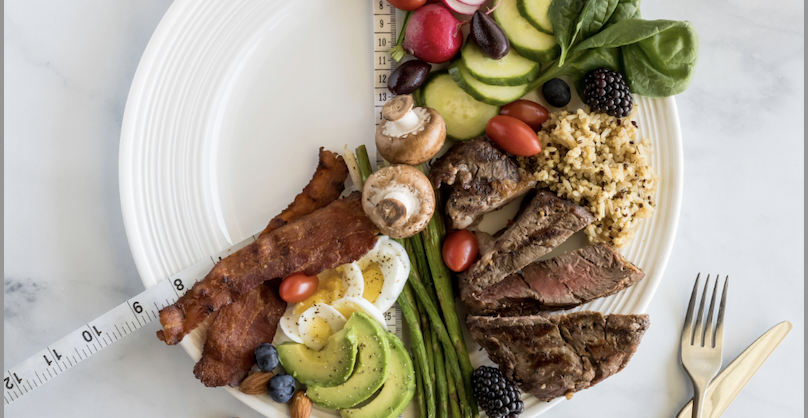
Fasting may seem like a complex topic to approach, but by analyzing it, you can understand how to tackle it and what to do.
1. Start with the foundation: the meal plan, not fasting
Even before we talk about fasting windows, I would start with nutrition.
Intermittent fasting isn't magic: it only works if your nutritional foundation is solid.
The first point for me is always one:
👉 meet protein needs.
2. Protein and Fasting: How Much and Why
Generally speaking, I would set the power supply to about:
- 1.2–1.5 g of protein per kg of body weight
- ~1.5 g/kg if the goal is maintenance
- ~1.2 g/kg if the goal is muscle mass increase
Why not more?
Why proteins are primarily for building and maintaining tissues, not for providing energy.
👉 What really matters are the amino acids, not the absolute number of grams of protein.
2.1 Continuous Glucose Monitoring (CGM) During Fasting: Why I Would Use It
For this reason, I would supplement a portion of the amino acids with MAP.
- Indicatively 10-30 tablets,
- in my specific case, for my weight, also about 40.
This allows me to:
- efficiently cover amino acid requirements
- Not having to raise dietary protein too much
- leave more room for fats and carbohydrates, which are the true sources of energy
👉 It's a personal and individual choice.
You can also do it just with food, simply by increasing protein.
2.2 Energy: protein ≠ calorie
A key point that is often confused:
- Proteins are not a primary source of energy
- Energy comes from fats and carbohydrates
For this, once settled:
- protein
- Amino acids
- micronutrients
👉 I focus solely on fats and carbs, depending on my goal. Depending on which primary fuel source I choose—fats or carbs—I’d increase or decrease only those macronutrients based on my goal or my well-being. I always keep my protein intake in the 1.2–1.5 range (I’d only increase protein if I want to drop below 10% of body fat, because in that case my protein reserves start to run low).
If I want to lose weight, I reduce fats/carbohydrates. If I want to gain weight or feel lethargic and feel the cause is too little energy intake through food, I increase fats/carbohydrates. Proteins remain the same.
2.3 Protein Sources: What to Choose in Practice
Once it's clear how much protein to consume, the next question is inevitable:
👉 From what sources?
I would primarily start with animal sources, for the sake of amino acid quality, bioavailability, and nutritional density.
Red meat (ruminants)
- Cattle
- Sheep
- Game meat (venison, roe deer, etc.)
Check mark Excellent amino acid profile
Check mark Rich in heme iron, zinc, B12
Check mark Very filling
👉 In the media:
100 g red meat → ~20 g protein
White meat
- Chicken
- Turkey
- Pharaoh
- Duck
Check mark Lighter
Check mark Easy to digest
Check mark Useful if you want to reduce fat intake
👉 Also here, as an indication:
100 g → ~20–22 g protein
“Pink” Meat - Pork
- Okay, if it's good quality
- It's better not to base your entire diet solely on this.
👉 Similar values:
100 g → ~18–20 g protein
Eggs
- Chicken eggs
- Eggs of other species (e.g., ostrich, if available)
Check mark Reference protein for quality
Check mark Rich in micronutrients
Check mark Very versatile
👉 To get your bearings “by eye”:
- 1 medium egg → ~6–7 g protein
- 3 eggs -> ~18-20 g protein
Fish
- Tuna
- Salmon
- Cod
- Bluefish in general
Check mark Excellent digestibility
Check mark Source of protein + healthy fats (omega-3)
👉 Indicatively
- 100 g of fish → ~18–22 g of protein
(it depends heavily on the species)
Dairy products (if tolerated)
Only some, and only if well digested:
- Yogurt
- Aged cheeses
- Fermented dairy
Check mark They can contribute
❌ Non-essential
For those who DO NOT count calories (eyeball approach)
A simple and practical reference:
- 100 g of meat/fish → ~20 g of protein
- 1 egg → ~6–7 g protein
👉 This is worth:
- for red meat
- for white meat
- for most fish
You don't need to be perfect to the gram.
Maintain consistency over time.
3. Micronutrients: many already covered
If the diet is already built on meat, fish, and eggs, it must be clearly stated that:
👉 Most micronutrients are already covered.
Meat, fish, and eggs indeed provide:
- B vitamins (B12 in particular)
- zinc
- iron
- selenium
- iodine (especially from fish)
- Vitamin A (retinol)
- Vitamin D (fish, eggs)
- hill
- Phosphorus
From this point of view, vitamins and minerals are often already well covered.
3.1 Micronutrients that may be undercovered
In a diet based on meat, fish, and eggs (without offal), some micronutrients may be:
- vitamina C → covered, but in lower quantities
- folate (B9) → present, but not abundant
- Potassium → present, but often lower than in a mixed diet
- Polyphenols and bioactive compounds → almost absent in animal foods
👉 This is where vegetables make sense, not for calories, but for micronutrient quality.
3.2 Complementary Vegetables (other types of vegetables are also fine if desired, these are complementary to a diet where protein is covered by animal sources)
- Fermented vegetables (potential support for the gut microbiota)
Examples:
- Sauerkraut
- kimchi
- Artisan fermented vegetables
Function
- intestinal microbiota support
- organic acids
- B vitamins in small amounts
👉 Small quantities, specific function.
- Bitter greens (digestive stimulant)
Examples:
- radicchio
- chicory
- Endive
Function
- Bile secretion stimulant
- Digestive support
- bioactive bitter compounds
👉 Not for “random fibers,” but for digestive function.
- Vegetables rich in vitamin C and folate
Examples:
- broccoli
- Cauliflower
- kale
- Brussels sprouts
Function
- vitamin C
- folate
- Potassium
👉 I am among the vegetables that truly add what might be missing. Again, a small portion, but with a precise function.
- Herbs
For aromatic herbs, I mean:
- parsley
- basil
- rosemary
- Salvia
- Thyme
Function
- polyphenols
- flavonoids
- Antioxidant compounds
👉 Even if used only for seasoning, it is enough to absorb the beneficial compounds.
- Other good vegetable choices (nutritious/calorie)
If one wants to include vegetables without adding too many calories:
- zucchini
- spinach
- beets
- fennels
- Lettuce for those who like it
Check mark Good mineral profile
Check mark Low glycemic load
- Check markEasy to digest
- What are NOT vegetables, in this context
- I am not the energy base
- they do not replace proteins
- they “clean” nothing
- They are not mandatory if you don't like them.
👉 They are tools, not dogmas.
4. Calorie: by feeling or by numbers
At this point, it depends on the person.
🔹 If I don't count calories:
- I base it on energy, hunger, performance, recovery, and depending on how I feel, I increase or decrease fats and carbohydrates.
🔹 I'll tell you:
I calculate calories from protein sources and vegetables I eat, and I fill the remaining calories left from my maintenance calories with fats and carbohydrates (if I don't eat carbohydrates, I only use fats).
- maintenance → stable calories
- muscle gain → +200/300 kcal (max ~500)
- Weight loss → reduce fats or carbs, not protein
4.1 How I would personally model it in practice (example only)
- if I feel lethargic/my workouts aren't at their peak → I increase fats by 20g or carbs by 40-50g initially, then I see how I respond
- If I feel energetic and want to lose weight, I reduce fats/carbohydrates by the same amount each time. I would maintain this for a period, and if after a couple of days I don't notice any differences or if I stop losing weight, I would lower it again by the same amount and repeat the cycle.
(But I don't want to go into too much detail. These are personal choices, and this text should be a guide, not an instruction manual.
👉 The only real levers are fats and carbohydrates, not proteins.
5. Grasses: how many, why, and which ones to choose
After clarifying proteins and micronutrients, the third pillar is energy.
And this is where fats come into play.
Fats: not optional
One thing must be said clearly:
👉 A minimum fat intake is essential
Indicatively
- at least ~50 g of fat per day
Not for caloric reasons, but because:
- Some fats are essential
- They are needed for hormones, cell membranes, and the absorption of fat-soluble vitamins (A, D, E, K).
Below a certain threshold, the body doesn't function well, especially in the long run.
5.1 Essential grasses
The essential fats are:
- omega-6 (linoleic)
- omega-3 (ALA, EPA, DHA)
👉 In a diet with:
- meat
- fish
- eggs
this allowance is usually already covered, especially if there's fish and eggs.
5.2 Grassi “base” che sceglierei io
If I had to choose the main sources, I would focus on stable, traditional, and well-tolerated fats.
- Animal fats
- donkey
- ghee
- lard
- tallow
Check mark Heat stable
Check mark Good fatty acid profile
Check mark Historically used
Check mark Excellent tolerability
- Extra virgin olive oil
- raw
- not for frying
Check mark Rich in oleic acid
Check mark Polyphenols
Check mark Good daily choice
- Seed oils: if one uses them
If you really had to pick one:
- High oleic sunflower oil
Why:
- richer in oleic acid
- less stable than classic seed oils
👉 In any case:
- better raw
- it's better not to make it the basis of your diet
8. Carbohydrates:
Once settled:
- protein
- micronutrients
- fats
Carbohydrates become a tool, not an obligation.
👉 They may or may not be there, depending on:
- target
- activity level
- individual answer
- intermittent fasting style
8.1 Carbohydrates: What They're Really For
Carbohydrates are mainly used for:
- quick energy
- Training support
- recovery
- Signal of abundance
They are not essential for survival, but they can be very useful in certain contexts.
8.2 Carbohydrates I would choose
If I were to include them, I would aim for simple, recognizable, and digestible sources.
- Potatoes and sweet potatoes
- classic potatoes
- sweet potatoes
Check mark Simple starch
Check mark Good digestibility
Check mark Easy to dose
👉 Excellent as a base when you want energy without excess.
- Rice (choosing well)
- white rice
- Jasmine rice
- Basmati rice
Check mark Few antinutrients
Check mark Easy digestion
Check mark Great pre or post-workout
👉 Who values quality and simplicity, not exotic variety.
- Millet
Check mark Gluten-free
Check mark Good source of complex carbohydrates
Check mark Interesting alternative to rice
- Sourdough bread
- simple flours
- long fermentation
Check mark Better digestibility
Check mark Less impact compared to industrial bread
👉 Not everyday for everyone, but a valid option.
- Fruit
Fruit provides:
- glucose + fructose
- Potassium
- vitamin C
- polyphenols (variable)
It makes sense especially:
- in active people
- in the context of training
- far from chronic excesses
👉 Better to have simple, seasonal fruit, without overdoing the quantities.
- Miele
Honey is a very quick source of carbohydrates, but also nutritionally interesting.
Contains:
- Glucose and fructose
- mineral traces
- (varied) bioactive compounds
👉 It can be useful:
- Pre or post workout
- to support energy
- in contexts of well-structured intermittent fasting
It is not essential, but it can be an effective tool if used wisely.
⚠️ Important disclaimer: fasting should not become chronic malnutrition.
It's important to clarify one key point.
Intermittent fasting also works because, in practice, it often leads to eating less.
You feel fuller, clearer-headed, and sometimes even more energetic, especially at the beginning.
👉 This is normal.
👉 And that's also why many people find it easy to follow.
The problem arises when it becomes chronic
However, if eating less becomes the norm for months or years, the body no longer interprets the situation as a choice, but as a prolonged energy deficiency.
This is where biological adaptation comes into play.
The body:
- reduces energy expenditure
- lower thyroid function
- reduces hormone production
- Redirect resources towards survival and maintenance, not towards growth, fertility, or performance
👉 In a context of scarce energy, reproduction and sex hormones become a secondary priority.
This is a protective mechanism, not an error. It's not the fault of intermittent fasting itself, but of chronic underfeeding.
Why does it “work great” at the beginning?”
In the beginning, it often happens that:
- hunger is reduced
- The energy seems to be increasing
- It's easy to lose weight
- One feels “better with less.”
This can work very well for a while.
The problem is not fasting itself,
but remain too long in deficit without noticing.
✅ How to use fasting sustainably
- If fasting is done normocalorically, it can be maintained for a long time
- If it's done with a deficit, it should be used periodically, not chronically.
- If signs appear such as:
- persistent fatigue
- cold
- libido loss
- irregular cycle
- Difficulty losing weight despite eating very little
👉 It's time to re-evaluate energy input, not tighten it even further.
Key message
Intermittent fasting is a powerful tool, but it should not become a permanent under-eating strategy.
If used well:
- It can improve energy and metabolism
If used incorrectly:
- can push the body into survival mode
9. Useful integration: when power is not enough
Good nutrition always remains the foundation.
That said, there are nutrients that, even with a well-structured diet, can be suboptimal, especially in the context of:
- training
- stress
- Modern life
This is where targeted supplements come into play, not to compensate, but to optimize.
- Essential Amino Acids (EAA)
We've already talked about it, but it's worth briefly reiterating.
MAPs can be useful because:
- provide readily available amino acids
- reduce the need to raise dietary protein too high
- they help cover protein needs even in restricted eating windows
- Creatine
Creatine is one of the most studied and safest supplements available.
Why it can make sense even when eating well:
- Meat contains it, but in limited quantities
- To reach the minimum effective dose of 5g, a kilogram of red meat would be needed
Main benefits:
- Strength and performance support
- Best muscle recovery
- Cognitive and neurological support
👉 Typical dose
- 5g per day as a base for support
- 5-15g to maximize muscle effect
- 20+g to maximize neurological effects
Creatine isn't just for bodybuilding: it's cellular energy support.
-
Magnesium
Magnesium is one of the minerals most easily deficient, even with a careful diet.
Why diet alone is often not enough:
- stress → increased consumption
- sweating
- physical activity
- depleted farmland
What is it for:
- neuromuscular function
- relaxation
- sleep quality
- stress management
👉 Even those who eat well can benefit from it.
-
Marine
Even on a diet with fish, it's not a given that you'll cover your optimal needs.
Why integrating them can make sense:
- Fish consumption is often irregular.
- The omega-6/omega-3 ratio is often unbalanced.
- EPA and DHA have key roles
Main benefits:
- inflammation modulation
- cardiovascular health
- Cognitive support
- Hormonal function
👉 In this case, quality is everything:
- better few, but well purified and concentrated
- Other nutrients: only if needed
Besides these, other micronutrients can be supplemented only if necessary, for example:
- Iodine
- selenium
- Vitamin D
👉 Who makes sense to customize, not to integrate “out of the box”.
Fasting duration and eating window: how to choose
When talking about intermittent fasting, one of the main questions is:
👉 How long to fast and when to eat?
The most common and sustainable protocol: 16:8
The most well-known protocol and, for many people, the most sustainable is 16:8:
- 16 hours of fasting
- 8-hour eating window
It's a good compromise because:
- It's not extreme
- it integrates well with social life
- allows you to eat enough if well organized
👉 For this reason, it's often the best starting point.
Should I skip dinner or breakfast? What does the literature say
It is important to be precise here.
Yes, literature suggests that from a metabolic standpoint, it might be more favorable to eat earlier in the day and fast in the evening.
This approach is known as early time-restricted feeding (eTRF).
Studies show that:
- Insulin sensitivity is higher in the morning
- Glucose management is more efficient in the early hours of the day.
- Alignment with the circadian rhythm (we are diurnal mammals) can be advantageous
👉 So, theoretically, keeping breakfast and having dinner earlier has a good physiological basis.
But doesn't the theory come before the person?
That being said, there's a fundamental point:
If skipping dinner causes intense hunger, stress, or worsens sleep,
then it's not the right choice.
Sleep is a key regulator:
- hormones
- metabolism
- Appetito
A fast that:
- increase cortisol
- sleep worsens
- makes irritable
👉 loses many of its benefits.
In these cases:
- Dinner is kept.
- or the fasting duration is revised
Skipping breakfast: when it makes sense
Skipping breakfast can be a valid choice if:
- In the morning, you're not hungry
- Due to work or organization, there is no time.
- You feel good and clear-headed like this
👉 For these individuals, a window like 12:00 PM–8:00 PM (just as an example) can work very well.
It is not “unnatural” if:
- Energy is good
- sleep isn't affected
- The caloric intake remains adequate
The true criterion for choice
More than the “perfect” window, some signs are important:
- energy throughout the day
- sleep quality
- manageable fame
- Regular menstrual cycle (in women)
👉 The best fast is one that:
- can you sustain it over time
- it doesn't lead you to eat too little
- it doesn't push you into survival mode
Today I wrote perhaps a bit more than usual, but I tried to synthesize to make everything extremely clear, but if you have other questions or doubts, comment below, I'm reading!
Thank you for your time!
See you soon,
Oliver
Thank you, Doctor! A complex yet understandable presentation. We truly need education to maintain our health.
Truly exhaustive, congratulations
Hello, I am 62 years old and have been in menopause for 8 years. I haven't had major problems, but I am quite worried about my joints, as I have some issues, especially in my knees. I've decided to lose weight and am very interested in intermittent fasting. I've been thinking about it for a while and have read your advice. I wanted to ask if this type of diet could also reduce inflammation in my body in my case. Thank you.
Certainly. An energy deficit is already effective on its own in reducing inflammation, especially if you eat unprocessed foods. Then, if you combine other natural interventions that help control stress levels and reduce inflammation levels, you will notice benefits and improvements much sooner.
Certainly. An energy deficit is already effective on its own in reducing inflammation, especially if you eat unprocessed foods. Then, if you combine other natural interventions that help control stress levels and reduce inflammation levels, you will notice benefits and improvements much sooner.
Dear Sir/Madam,
Should protein intake be calculated based on ideal weight or actual weight? Thank you very much. I am 1.55 tall and currently weigh 65 kg and I am following the soft MAP diet. I am overweight and would like to understand how to calculate my correct protein intake.
So I would calculate with normal weight, unless one is in an advanced stage of obesity, which is not your case.
Thank you for all of your publications. Question: How much MAP should I take and when? And when will I know I need it? Thank you.
Thanks Oliver, you've been very clear and thorough.
The only problem is that MAPs cost a fortune!
Thanks anyway 🙏
Good morning, thank you Oliver.
Detailed and very well contextualized.
I follow 16/8 intermittent fasting by skipping breakfast Monday through Friday, and I'm doing great.
With the advice you've given, I will have more very useful guidance.
I'm very pleased, keep it up! 🙂
Thank you so much for this article that answers all my questions and doubts simply and comprehensively!
You are a photonics team!
Thank you very much, I really appreciate your comment.
Hello Doctor, I'm Meghi, 53 years old
I weigh less than 50 kilos and I move my body consciously and constantly. Very low carb diet. However, since menopause, I digest poorly, especially in the evening (even though I have dinner by 6 PM and avoid proteins because they disturb my sleep...).
I'm considering having breakfast, lunch, and a “snack” around 4:00 PM and then nothing else until morning to see if my digestion and sleep benefit. Thank you for your information, it's invaluable!
Hello Magda. You know your body best and only you can discover the rhythms and protocols that best suit your needs. You can try to eat dinner earlier, or eat less and only foods that you digest well. Happy searching!
Oliver, good morning, thank you for your valuable suggestions.. I've been following Mamma Italia for a long time 🥰.
Lately, I've often been offered products like the Keylife kit reset One day as a substitute for actual fasting. What do you think? Could it be a valid method? Thank you, Terry
So I would never buy it because in my opinion it's a scam. Maybe I shouldn't answer so directly, but you asked for my opinion. That said, I don't know the product and I only just researched it now, so maybe there are people who are happy with it, but you absolutely don't need it and I don't see any benefit in buying it.
Thank you very much Oliver!!
I would say it's an excellent report, capable of clearly and understandably explaining important concepts even to those who are not prepared. Thank you very much.
Thank you very much for the information provided. I've gotten used to this type of diet where I feel very good, and to intermittent fasting.
How many times a week do you recommend fasting?
I am 67 years old, retired but active, and at a normal weight. .
I take omega 3 and magnesium, but not MAP.
I follow a not-too-restrictive low-carb diet.
Thank you for your advice!
Fiorella
I wouldn't know how to answer the question “How many times a week do you recommend fasting?" since there's no official answer, and it's not something absolutely essential, nor does someone who doesn't do it lose out significantly. It's more of an automatic practice that happens when you set up your diet. In that case, intermittent fasting every day doesn't become a conscious decision but a natural and physiological adaptation.
In other words, you have to fast so much that you still derive benefits from it. If fasting X days a week makes you feel better, then you can try increasing or decreasing and see which case you feel better in.
Thank you Oliver, that was really thorough.
Thank you very much! I also read the doctor's second book on hormones and fasting. I'm in perimenopause and realized I was wrong to always skip breakfast. Now I alternate, just as the doctor suggests in the book!
Thank you very much, all valuable information.
I'll see you in Bolzano in April, I can't wait.
Thank you very much and see you soon!
As always, clear and precise. I have a doubt: in case of vertebral fracture consolidation, is it advisable to increase the protein-to-body weight ratio to 2? Do MAPs provide one gram of amino acids per tablet? Thank you
They should give 2 g per tablet
For how many consecutive weeks can one fast before the body enters survival mode?
Thank you
It depends on how little you eat, how much activity you do, how and how much you sleep, how stressed you are, etc.
In other words, as long as you feel good and energetic, then there's no problem. If for a period, meaning several days, you notice yourself becoming increasingly lethargic, exhausted, hungry, sleeping worse, and workouts are draining and not stimulating, then it's time to take a break, as your body is signaling it's at its limit for the moment.
Both MAP and protein are 1 gram per tablet. In case of vertebral fracture consolidation, I would keep protein intake at 1.6g/kg of body weight, take 30 MAP tablets, and be sure to cover my calcium intake and have sufficient Vitamin D and K, especially Vitamin K2 MK-7.
Good morning! I can do 14-10 fasting, rarely 18-8. I train fasted with PHA at 7:30 AM for 30 minutes, 3 times a week. I have breakfast around 10:30 AM, lunch at 2:00 PM/2:30 PM, and dinner at 7:00 PM/8:00 PM, so I don't skip any meals. Can this still be considered intermittent fasting? Thank you. Maura
Of course! The important thing is that you feel good and have enough energy and desire to face the day.
Thank you!
All the information I need is written clearly.
Congratulations... now all that's left is to begin.
Thank you so much and go for it!!💪
Congratulations! An article clearer and more comprehensive than a thousand videos I've listened to over two years of research, which invariably praise fasting as a panacea for all ills. Or demonize carbohydrates. You've answered all my questions, like why if I don't eat, or eat few carbohydrates in the evening, I get terribly cold and can't sleep? Why is my ideal fasting window 12-15 hours? Why are refined carbohydrates demonized, but I can't tolerate fiber and do well with potatoes and white rice? Thank you so much, thank you!
Thank you very much to you for the comment. 🙂
Well written and clear. Thank you very much
Thank you:)
Question: Does it make sense to incorporate intermittent fasting during the week, not every day, but on approximately 3-4 consecutive days? I've noticed that personally, this way I can maintain my body weight and manage fasting better, which I consider a fabulous tool, with less stress.
Thank you for the interesting information and for sharing it. Congratulations on your expertise!
Absolutely yes. If you find that you're more comfortable this way, then it's definitely the right path for you.
In case of morning training, can training on an empty stomach worsen performance? How much does fasting affect training?
Not necessarily. If you're not adapted, meaning your brain isn't ready and fears depleting its energy reserves, you might feel weaker, but this is often mental and temporary. If you've eaten enough in the days prior, are well-rested, and have full, or at least more than half-full, reserves, then there's no problem successfully facing a gym workout. If it's a 5-hour Rocky-style workout, maybe the situation changes, but even then, if you're used to it and have eaten enough in the preceding days, it would be feasible depending on your fitness level.
Wow, thank you, very precise and clear. Very useful, thanks a lot.
Thank you so much for all this healthy information… I'm from Molise. I'd be happy to meet you in person to decide everything together… have a good day.
I would really like that too.
Thank you very much, Oliver! I have a question: do MCTs break a fast?
Thank you, Consuelo
If you mean fasting in the strict sense of the word, then yes. However, I wouldn't worry about MAPs.
As always, very clear, thank you
Thank you for this very clear explanation.
Thank you for this very clear explanation.
Good morning and thank you for the welcome suggestions. In case of Hashimoto's thyroiditis, is intermittent fasting recommended? Thank you and keep up the good work.
As long as you feel well and have no problems with hunger, sleep, fatigue, weakness, irritability, and on the other hand, fasting makes you feel energetic, light, focused, in control, free, and helps you lose or maintain weight, then it's perfectly fine.
Very useful information to get an idea of what it might be like. I'd like to try it, but... with Hashimoto's thyroiditis, I don't know if it would be okay.
Thank you
As long as you feel well and have no problems with hunger, sleep, fatigue, weakness, irritability, and on the other hand, fasting makes you feel energetic, light, focused, in control, free, and helps you lose or maintain weight, then it's perfectly fine.
Oliver, thank you so much for this EXCEPTIONAL information, simple yet very clear. It's always very instructive to follow you. A hug from Switzerland
Thank you very much, Oliver, a beautiful and complete article. I have a question about creatine, 5g a day as a supplement, when should I take it while doing a 16.8 fast (skipping breakfast)? Thank you
Before or after training, but as I wrote in the article, it doesn't make much difference, the important thing is to take it.
Thank you very much, it was exhaustive. Now I can start intermittent fasting without any doubts.
Greetings.
Loredana
Thank you very much Loredana and have a good start.
Thank you very much Oliver, very clear. I believe that often there is a lack of education in eating well.
Your work helps us have more tools for knowledge.
Thank you so much for the words and for spreading the message and educating in turn.
Thank you Oliver, very interesting content. I have a question, how many protein grams are in 10 MAPs? Regards
Everything is clear. I follow a low-carb diet and would like to know how to take MAP. Thank you in advance.
Thank you, Oliver. I particularly appreciated this article because it clarified this thorny and very controversial topic of fasting once and for all. Personally, I've learned to listen to my body much more and consequently realized that evening fasting led to disturbed sleep due to hunger... so I opted for a light dinner (which ended at 7:30 PM) consisting of vegetable soup with veal bone broth and, if I feel like it, a bit of sheep's ricotta with currants or raspberries. The next morning I wake up full of energy and stay that way until 11:30 AM, then I start lunch with three Spiegeleier and Claudia Perbellini's recipes. 🤗❤️🌻
I've heard that the ketogenic diet can also lead to negative consequences in certain cases. How can these negative consequences be noticed?
Thank you so much, Oliver! Everything was explained very well and with many tips to help us manage our diet better.
Thank you very much Oliver,
Very clear, I have a question. Can magnesium be taken after coffee?
Greetings
Luca
Thank you, this compendium has been very useful to me. Since following you and starting intermittent fasting by skipping dinner, my quality of life has improved greatly. I sleep well and feel energetic and clear-headed all day. I'm 66 years old and finally reaching my ideal weight. Thanks again for your valuable contribution to all of our well-being! My husband (a doctor) is also experiencing benefits, even though he doesn't always manage to skip dinner.
~1.5 g/kg if the goal is maintenance
~1.2 g/kg if the goal is muscle mass increase
But isn't it the opposite?
Perhaps I expressed myself poorly, but at a 1.2 ratio during the bulking phase, because you eat even more, and the caloric surplus suppresses protein degradation up to a certain point, therefore, smaller amounts of protein are needed, and you can save the volume that would be occupied by proteins, to give more space to fats and carbohydrates, which are our true energy sources. To cover the potential remaining protein needs, I would use MAPs.
Well written, it's very clear! Thanks Oliver
I've been intermittent fasting for years now and I feel good, I was already doing it before I got pregnant. In the morning I have energy and I'm not hungry, the only "doubt," let's say, is whether drinking black coffee on an empty stomach can be harmful in the long term. Otherwise, thank you for this very comprehensive information 😊
Is fasting also recommended for Hashimoto's with subclinical hypothyroidism and reactive hypoglycemia? I am 71 years old and need to lose a few pounds, but I've read that with these conditions, it's better not to skip meals. What do you think?
Thank you, all very interesting and useful. I would like to understand how to supplement MAPs. Do I need to calculate the weight and amount of protein taken from food? For how long is it useful to supplement?
Thank you
Good afternoon Oliver, I have a question for you regarding intermittent fasting, and let's say a body recomposition phase for a very active athlete who wants to lose 10-11 pounds to get leaner but without being a slave to weighing everything and counting calories. Could you give me some advice, more or less what would you do? Thank you, I wish you a good evening.
Personally, I would do: 1.5-1.8g of protein per kg of body weight plus MAP, zero carbohydrates, and fats to get approximately 500 calories below my maintenance. Since I don't count either, I would go for roughly 700-900g of meat/fish/cheese + eggs, which is plenty, and add another 100-150g of butter/tallow/lard/ghee.
Then I would try to get 15,000 steps a day and work out at least 4 times a week. This is if I wanted to lose weight fairly quickly.
Thank you, Doctor.
Her explanations are always exhaustive, simple, complete, and very instructive.
Understanding how to make our body work at its best is fundamental.
I started following you and Dr. Tomasi with the Soft Map and I repeat it in cycles.
I take MAPs periodically and especially
when I don't eat much meat.
Thank you very much
Thank you for the advice... especially regarding the management of proteins, fats, and carbohydrates based on the goal.
Energy, training, weight loss...
Very clear.
Illuminating, clear, and valuable, it is finally clear to me that fasting can become a very detrimental boomerang if not practiced taking into account what you have generously explained to us.
Thank you so much, Oliver!
Thank you Oliver, everything is very clear! ❤️
Good morning Oliver, thank you for the clarity supported by practical examples: a guide that can be truly helpful. For autoimmune diseases that predispose to thrombophilia, do you recommend implementing 16:8 fasting more often during the week? What do you think about 5-day fasting? Thank you and have a good Sunday. Francesca
Thank you very much Olivier, the theory of intermittent fasting was explained very well. If possible, I would like to know a valid alternative to MAPs since they are very expensive and run out quickly... best regards 👋
A valid alternative to MAP, in my opinion, unfortunately, would be to eat more real protein. If you really can't manage that, protein powder might be better than nothing.
Thank you very much Oliver, you explained everything perfectly and clearly.
As always, very good.
Good evening, I read the article about fasting and found it super interesting. I do the 16:8 fast. It's very beneficial.
I have to say I was amazed to read the amount of MAP Oliver is taking. I happen to take 10. But I have trouble swallowing so many pills, let alone 30 😅. And unfortunately, it's also a huge expense.
However I take them, but not regularly, only before going to the gym.
Thank you for these articles and many others.
Isabella
Hello Oliver. I need to know how to take 20+ grams of creatine when I happen to sleep poorly, for contingent reasons, with the consequences thereof. I'm very interested, but I fear I might experience adverse effects. Having passed 55 years of age, being overweight, and having a very active bowel (unlike most, it seems) I wonder if this promising solution would be suitable for me. I think I read that the experiment related to taking 20-30 grams of creatine with positive effects on cognition/jet lag etc. was on a sample of young people all in excellent health. I'm not sure, however. Also, with what quantity of water should I dissolve 20-30 grams, given that even with 3.5 grams in a glass it takes time and some residue remains? I hope you will grant my request. Thank you!
Thank you very much, and I also couldn't take more than one at a time at first. 😂
Thank you very much for your always invaluable advice!
Good morning. Very clear and complete article! Thank you very much, Oliver.
I already practice intermittent fasting 16:8 (breakfast at 6:00 AM and lunch by 2:00 PM) with a carnivore diet, which for me is the best in the world!
But for my age (I'm 57) and my vanity (😁), I take 20g of bovine collagen powder in the morning... The topic is really unclear (is it needed? not needed?... it seems like it is to me...), but I wanted to ask if taking collagen compromises fasting and if I can take it on days when I do 24-48 hour fasts, or not.
Thank you in advance, but above all, thank you from the bottom of my heart for what you are doing; keep up the good work! Health education is not easy, but it is absolutely necessary. Good luck
Thank you, son, Dr. Oliver, and thank you so much, Mom, Dr. Cristina Tomasi! 💗💗You are fantastic and unique, up-to-date with all the research in the field of medicine!
Thank you for this wonderful and exhaustive article