
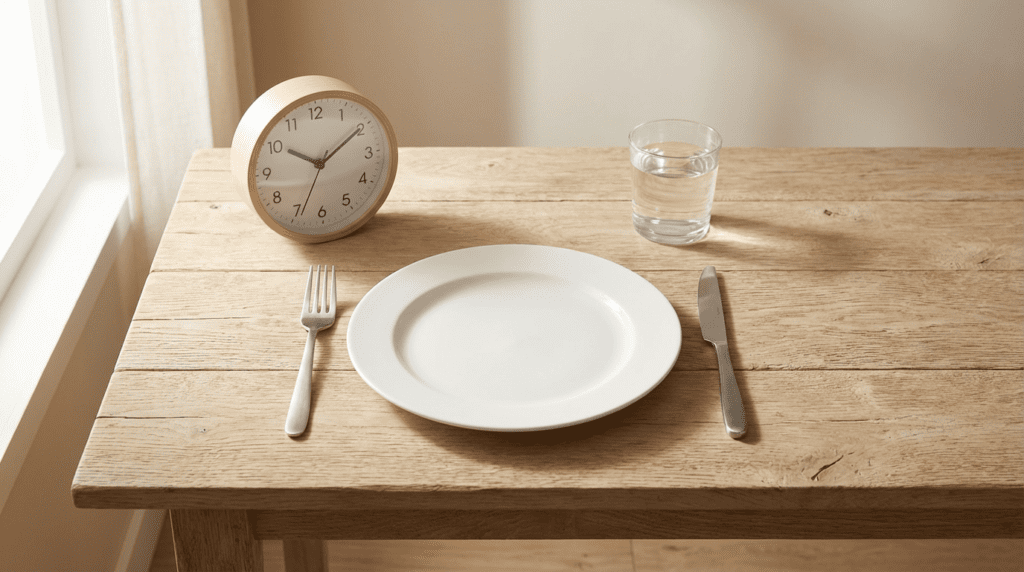
We live in an era where eating has become continuous, automatic, almost unconscious.
Yet, For most of human history, the absence of food was not an exception:
it was a normal physiological condition.
Fasting is not born as a technique, nor as a challenge, it is born as a space.
Space in which the body, finally, doesn't have to deal with introducing, digesting,
store and can go back to doing what it's designed for: to maintain oneself.
An ancient word for an ancient function
The word "digiuno" (fasting) comes from the Latin "ieiunus," meaning empty, free from food.
But “empty” in this case doesn't mean a lack.
Means no load.
Even ancient civilizations realized that, at certain times, taking away is more powerful than
Add.
Hippocrates observed that during illness, the natural instinct is not to eat:
not out of weakness, but because the body redirects the Energy towards healing.
Modern science has only given a biochemical name to this intuition.
Fasting is not a single state, but a process
One of the most common misunderstandings is thinking of fasting as a clear-cut event:
You eat, or you don't eat.
Actually, fasting is a physiological progression, an orderly sequence of adaptations. In the first few hours, the body simply finishes what it was doing: digesting.
Then, gradually, change strategy.
The first 12 hours: end of the postprandial phase
In the hours following the last meal, the body is in a state defined as post-prandial:
- relatively high insulin
- glucose as the main energy source
- storage-oriented metabolism
When the meal is fully digested and absorbed, insulin begins to drop.
This passage is crucial.
Insulin reduction:
- remove the buildup signal
- allows lipolysis activation (release of fatty acids from adipose tissue)
- Signal the liver to begin producing endogenous glucose (gluconeogenesis)
At this stage, the body is not yet in deep fasting, but it is changing its system.
Between 6 PM and midnight: fuel change and activation of autophagy
When liver glycogen stores begin to decrease, the body must make a metabolic decision:
continue to depend on glucose or become more flexible.
This is where the real paradigm shift occurs.
🔹 Metabolic flexibility
The body increases fatty acid oxidation and begins to produce ketone bodies in the liver.
Ketones are not an “emergency fuel”: they are a highly effective energy source
efficient, especially for the brain.
🔹 Autophagy
At the same time, autophagy is activated more evidently, an intracellular recycling process regulated by energy sensors such as:
- AMPK (energy sensor)
- mTOR (nutritional abundance sensor)
When mTOR is inhibited and AMPK is activated, the cell enters maintenance mode:
- Damaged proteins are disassembled
- Inefficient mitochondria are eliminated
- Obsolete components are recycled.
It's not destruction: it's quality.
Around 36 hours: systemic adaptation and savings intelligent
If the fast continues, the body demonstrates one of its most sophisticated capabilities:
selective protection of noble tissues.
In this phase:
- growth hormone (GH) increases
- Protein turnover is reorganizing
- Muscle mass is largely preserved
- The brain uses more and more ketones, reducing the need for glucose.
This is a key point that is often misunderstood:
Fasting does not automatically lead to muscle loss.
Actually, in the correct context, the body defends muscle tissue because it is essential for survival.
48 hours and beyond: profound reorganization of signals cell phones
Starting at 48 hours, fasting enters a more therapeutic rather than nutritional dimension.
Observed:
- reduction of inflammatory markers
- improving insulin sensitivity
- Increased mitochondrial biogenesis
- greater efficiency of the respiratory chain
The body is not in “blind saving mode,” but in optimization mode.
After 72 hours in controlled and non-universal contexts, autophagy becomes systemic and some studies show a reorganization of immune cells and endocrine signals.
It's not necessary to reach that point to achieve benefits: it's simply a demonstration of how well the body can adapt.
What do organs actually receive from fasting
Brain: BDNF, neuroplasticity, and “cleaner” fuel”
When fasting continues and ketone bodies increase (especially beta-hydroxybutyrate, BHB), the brain receives not only an alternative fuel but also a signal.
BDNF and neuroplasticity
BDNF (Brain-Derived Neurotrophic Factor) is a “trophic protein”: a molecule that supports the growth, survival, and connections of neurons. In simple terms: it helps the brain adapt and learn.
In various studies, metabolic states associated with fasting Each other ketosis show an increase in signals related to neuronal plasticity. The reason is consistent with evolutionary logic: In times of food scarcity, a brighter and more adaptable brain increases survival chances..
2) Ketones as efficient fuel
The brain can use BHB as an energy source; many people perceive this as increased mental clarity. It's not magic: it's a fuel switch with different energy and hormonal dynamics.
3) Fewer blood sugar fluctuations
With low insulin and more stable availability of energy substrates (fatty acids + ketones), the system can become more “stable,” with fewer peaks and crashes. In many individuals, though not all, this translates into a feeling of greater mental continuity.👉 In summary: fasting can become a context in which the brain operates with more stable energy and with pro-adaptation signals (BDNF/neuroplasticity), especially when ketogenesis is active.
Mitochondria: efficiency, quality, and energy “cleanliness”
During fasting, changes occur that primarily concern mitochondrial quality.
1) AMPK: the low energy sensor AMPK (AMP-activated protein kinase) is a biochemical “switch” that turns on
when available energy is low. When AMPK rises, the cell shifts its focus to:
- efficient energy production
- saving non-essential processes
- activation of repair mechanisms
2) Autophagy and Mitophagy: Internal Maintenance
Autophagy means “self-eating”: the cell recycles damaged components.
Mitophagy is a specific subprocess: it eliminates dysfunctional mitochondria.
This is crucial: it's not enough to have many mitochondria; they need to be good.
Fasting can promote this internal “natural selection,” increasing the proportion of more efficient mitochondria over time.
3) PGC-1α and mitochondrial biogenesis PGC-1α is a regulator that promotes the creation of new mitochondria and adaptation
Oxidative. Fasting + light exercise can enhance signals that lead towards a greater capacity to oxidize fats and produce ATP in an orderly manner.
👉 In summary: Fasting is not just “less energy,” but often more efficient energy,because it improves mitochondrial quality control (mitophagy) and promotes oxidative adaptations.
Liver and Metabolism: Endogenous Glucose, Ketogenesis, and Sensitivity insulinica
The liver is the “management center” of fasting.
1) From glycogen to gluconeogenesis
Initially, it uses glycogen (glucose reserve). Then it produces endogenous glucose
(gluconeogenesis) from precursors such as lactate, glycerol, and some amino acids.
It's a controlled process: it serves to maintain glucose for tissues that need it most.
2) Ketogenesis: production of ketone bodies
When insulin is low and free fatty acids increase, the liver produces ketones. This
a way to export “concentrated” energy to the brain, muscles, and other tissues.
3) Insulin sensitivity
Fasting and reducing meal frequency can improve insulin sensitivity
(that is, the cells' ability to respond to insulin). In practice: less insulin
necessary for the same effect, in many people.
👉 In summary: The liver is the director that makes fasting sustainable, shifting from food management to reserve management, with often favorable effects on insulin and metabolic flexibility.
Immune System: Reprogramming and Noise “Cleanup” inflammatory
It's important to be precise here: fasting doesn't “boost” immunity indiscriminately.
Rather, in some contexts it can reduce inflammatory noise and promote regenerative processes.
- Reduction of pro-inflammatory signals related to overfeeding and high insulin
- Support for cellular turnover processes through autophagy
- Possible improvement of certain immunometabolic dynamics (interaction between metabolism and immunity)
👉 In summary: less “background noise,” more order. Not a superpower, but a normalization.
The point isn't that fasting is magical.
It's that it momentarily removes the “noise” of continuous abundance, and allows the body to activate programs that - by design - emerge when adaptation is needed:
greater mitochondrial efficiency, more metabolic order, and often a more Stable and plastic.
How to approach fasting without triggering unnecessary stress
From a physiological standpoint, fasting only works if:
- is not perceived as a threat
- is not associated with chronic stress
- it is included in a recovery context
This is why a gradual approach is essential:
- progressively extend the night window
- Start with intermittent fasting
- Improve sleep and diet quality
A fast that worsens energy, mood, and recovery is not yet the right fast.
So, in practical terms:
it makes sense to start with short intermittent fasts, gradually extending them over time (e.g., 10, 12, 14–16 hours), allowing the body time to adapt.
Only when these intervals are well tolerated — without marked drops in energy, concentration, or well-being — can one consider, if desired, a 24-hour fast.
For further extensions (30, 36, or up to 48 hours), is prudent wait a few weeks between each attempt, observing how the body reacts in the following period: sleep, hunger, mood, physical and mental performance. Each new step must be re-evaluated based on previous experience, not on a predetermined goal.
The central aspect always remains one: listening to the body's signals.
Fasting should be broken in the presence of marked stress signals or dysfunction (persistent weakness, dizziness, mental confusion, rapid heartbeat, marked worsening of sleep or mood).
May continue a fast just for“reach a set duration”if the body is
clearly signaling to stop. In that case, you're not stimulating adaptation,
but accumulating stress.
Movement during fasting: an evolutionary signal, not a contradiction
From an evolutionary standpoint, fasting never occurred while stationary. Light movement during fasting:
- improve fat oxidation
- enhance AMPK activation
- Strengthen adaptation signals
- Communicate to the body, “I am capable, I am not in danger.”
Walking, moving, and breathing deeply do not break your fast: the complete one.
Breaking the fast: reactivating without overloading
After a fasting period, the digestive and metabolic systems are more sensitive.
From an endocrine perspective, it is the moment when it is decided whether:
- gradually return to equilibrium
- to create an unnecessary shock
High-quality protein, moderate portions, and simple foods allow for:
- a controlled insulin response
- an orderly overview of protein synthesis
- A smooth transition out of fasting
What do you think?
Have you tried it?
Did you feel like trying it?
Let's talk about it, I'm reading you!
Thank you For your attention,
Always grateful.
Oliver
Is there an age limit? Even though I'm in good shape, I'm over 80. I'd be tempted, but I wouldn't want to overdo it. I'd appreciate it if you could give me some advice on this.
Good morning Oliver, in the past I tried intermittent fasting by using the overnight window, which seems the easiest for me to follow, but I noticed I had a lot of trouble sleeping, and since I already have disturbed sleep, I gave up. However, I have a lot of trouble skipping breakfast.
Good morning Oliver. Congratulations on this article, which is both scientific and easy to understand. I learned many things I didn't know. I am 56 years old, I practice sports (weights and cardio, 5 times a week), I follow a predominantly low-carb diet, and I have occasionally tried short fasts (12-16 hours) only when I felt like it. Indeed, the resulting psycho-physical state is surprising. It didn't seem possible. It's often more of a “mental” hurdle to try.
Thank you, have a good day, and see you in the next article.
Good morning, one day I would like to try prolonged fasting… Naturally, not “do-it-yourself” but supervised.
Thank you
Thank you and your entire family for the dedication you show to all of us. Although I practiced fasting during the first 40 years of my life and experienced its obvious benefits, today—at 72 and significantly overweight—I find it difficult to take it up again due to emotional exhaustion—or rather, a buildup of fatigue. However, I am certain of the value of this method, and thanks to you, I am gradually getting back into it. Hugs
Beautiful article. Very clear and comprehensive on the fasting process. Thank you.
Sono 24 ore che nn assumo cibo e sto benissimo…provero le 48 ore..il motivo ho intestino infiammato e voglio sfiammarlo nn dando lavoro….cmq se mi dovesse dare problemi lo interrompo ma finora tutto ok sento che si sta riorganizzando l’intestino…il mio obiettivo 72 ore ma come dicevo se mi provoca debolezza e capogiri piano piano assumo cibo leggero..
Very interesting and complete.
The most difficult phase to control is breaking the fast and resuming normal eating. For me, to use your words, it's difficult for me to return to a nutritional balance and I end up causing myself unnecessary shock. Intermittent fasting is much easier for me, for now. Thanks again.
Hi Oliver, I've been practicing intermittent fasting for 3 years now. I started with a 12:12 window for a month, then 14:10 for 3 months, and now I do 16:8 by skipping breakfast. If the Sunday lunch is very “rich and heavy,” I skip dinner and do a 24-hour fast. I'm 46 years old, and I can attest to having perfect lab results; I don't suffer from pain or intestinal bloating. In the past, I could manage diets for 5-6 months, then that was it. However, fasting allows me not to give up on enjoying normal foods but educates me on what healthy and balanced eating is. And I also owe this to the Toplife project that I always follow. I'm not perfect and certainly not super skilled, but I have definitely replaced many packaged products and have learned to be ’afraid of sugars,“ not healthy fats! I always think, “Let's send it to Mars.“ The only thing I find contradictory to other fasting nutritionists is the fasting hour when autophagy begins. In apps or books, it's mentioned that it starts at the 14th hour of fasting, and you talk about the 18th... maybe it depends on the subject's age? Thank you.
Ciao, anche io pratico il digiuno intermittente da quattro anni. Riesco a controllare bene il mio peso, forse perche ci abbino anche 2/3 sedute di palestra (boxe) e generalmente una corsa di 10 km a settimana. Ho 52 anni e mi sento un leone. Cerco di nn mangiare schifezze, ma tutto quello xhe mi va con moderazione. Ho levato completamente gli zuccheri e come te salto la colazione, finestra 16-8, anche se penso che ormai il fidico si sia un po’ adattato e cosi a volte digiuno completamente per 24-36 ore. L autofagia, per quanto ne so, inizia dopo 16-18 ore.. sono stato un po lungo e me ne scuso. Un abbraccio
Good morning, I would like to know which supplements can be taken during fasting without affecting it, thank you.
Hello Susanna,
Any supplement without carbs/sugars or protein is fine (vitamins, minerals, etc.). Fats are a separate issue, but I can't think of any fat-based supplements, except for omega-3, which I would take with meals, so not during fasting.
Hello Susanna.
All supplements without carbohydrates/sugars or protein (vitamins, minerals, etc.). Fats are a separate issue, but I can't think of any fat-based supplements, except for omega-3s, which I would take with meals, so that's not a problem.
This is creatine, even if you take it and it's without additives.
There should generally be no calories.
It's always interesting to read about fasting. Thank you
I can't go beyond 16 hours, but I never eat before 12 hours and I always do two or three 16-hour fasts and one or two 14-hour fasts weekly.
Basically, almost every day I narrow my eating window.
Good morning, Doctor,
I've been following you for years and I find you amazing. I practice intermittent fasting once or twice a week, and my nutritionist taught me how to do it. I only have one problem: since I prefer to do it from 3 PM to 6 AM, I need to take a melatonin lozenge and a herbal tea called "night relax" in the evening, otherwise I'm up all night. Until now, I haven't taken anything and I've slept poorly, but could I take these things without interrupting my fast? I'm also in pre-menopause, am 50 years old, and tend to have low blood sugar, but I've been following a low-carb diet for years, walk every day, do postural and elastic exercises (I can't do more due to a herniated disc and cervical issues), meditation with breathing, etc. Thank you.
Thank you. I've been having dinner at 6 PM for a while and trying to move breakfast to after 8 AM, and it works well for me. Unfortunately, for personal reasons, I often don't get enough sleep, and this is a problem for me because the next day I struggle to control the ”urge” to eat. However, the situation is improving.
I hope to manage to skip dinner, gradually, or just have herbal tea.
Thank you very much, Oliver. I've reached 24 hours without any problems. I will have to have surgery for an epigastric hernia. I am a fitness instructor (functional training, reformer Pilates, and aqua gym). Could I fast during the postoperative period? Thank you very much.
Good morning, I firmly believe in everything stated above. However, all of this is only valid for those who manage to start and remain consistent on a healthy path. But for those who can't find the strength, for various reasons: mental fatigue and stress, perhaps a lack of strong motivation, having to prepare dinner for others after working and not being able to share it... and so on, they find themselves trapped in a vicious cycle of trying to follow a nutritional program, which leads to continuous failures. Are there any suggestions to help start such a path not alone, but within a family context where everyone wants to have the classic 2 meals and breakfast? Thank you.
Interesting, I'm 52 years old and have been doing it for a year, meaning I skip breakfast and eat lunch and dinner! I work out 3 times a week and feel good!
But I have a question. Is it true, as some people say, that it's not good during perimenopause and menopause because hormones become even more imbalanced? Thank you very much.
Very interesting
I've never tried it, but I'd really like to see how my body reacts. I suffer from dizziness during periods of stress. I don't consider fasting to be stress, but rather a tough challenge, especially because it breaks a habit. I think the difficulty for me is more mental than physical. It would be interesting, though.
Good morning, doctor. Some doctors say that people with Hashimoto's thyroiditis cannot do intermittent fasting. What do you think?
Very interesting!!! Definitely worth considering for careful follow-up! Thank you very much for the information!
Good morning, I'd like to try doing this correctly. Can I only drink water during the fast? Or is anything else allowed? Thank you for your answer.
Very, very interesting, and I'm sure I'll need it, but there's a fear of making mistakes. Thank you for the beautiful information you give us. Laura.
Very, very interesting, and I'm sure I have an extreme need for it, but the fear of trying things without being supervised remains.
I did a three-day fast without any problems, continuing my daily activities. However, I didn't know how to break it. I had a little vegetable broth and a little fish. I don't know if that was correct. I would like to know what to eat when returning to a normal diet. The only problem is that I had become static. Therefore, I also ask, is it necessary to take probiotics or something else during a prolonged fast? Thank you
Good morning, thank you for this wonderful article. I wanted to know regarding intermittent fasting of 16-18-20 hours whether it is better to skip breakfast or dinner? I ask because, in my case, I've tried both but it seemed more effective for me to skip dinner. Both in terms of inflammation and weight loss. But I don't know if I'm making a mistake. Thank you very much for your availability!
It is advisable to do a 24-hour fast once a week.
As a believer, I found this type of advice in the Bible. I haven't practiced it too often, but I believe in its effectiveness. Every year, I would fast by drinking maple syrup, lemon, and cayenne pepper. After 4 days, I felt renewed. Is this okay as fasting, or is it better not to consume anything at all?
Good morning Oliver.
I really like the way you spoke about fasting, describing its benefits and evolution. I was fasting for 70 hours when I miraculously avoided a head-on car accident, sustaining, yes, a lot of material damage, but at least my son and I came out unharmed. I've always been convinced that I was able to think more clearly and act faster thanks to fasting. I do have a question, however: by taking creatine, which shouldn't break a fast, does it make sense to continue doing weight room workouts, or would it be preferable to do only light activity (treadmill)?
Actually, I also have a second question to ask: how often is a long fast (72/80 hours) recommended/possible to do?
Thank you in the meantime for the super interesting content, just like Dr. Tommasi's. I gladly follow you 😊
I will be grateful if you will answer me, but I will understand if this is not the case.
Good day to all
Good morning
With Hashimoto's thyroiditis, fibromyalgia, irritable bowel syndrome, and reflux... is fasting discouraged? I generally have a fasting window of 10-12 hours at night, but it doesn't give me the relief I'd like for systemic inflammation, even though my tests are normal.
Best regards, Cristina
Good morning, as usual, topics explained clearly and exhaustively, congratulations. I've thought about trying it several times, but for now, I'm sticking to a 10-12 hour window (eating dinner at 6:30 PM and having breakfast at 7:15 AM). My fear is that with a demanding job and training 6 days out of 7 with an average daily expenditure of 2600 kcal, skipping breakfast or dinner will make managing energy and mental clarity complicated. I'm willing to listen to and accept any advice or strategies!
Congratulations again, have a good day!!
If fasting lasts more than 24 hours, would it be better to supplement with vitamins and minerals? And which ones specifically?
Hello, thank you for this very interesting article. I am motivated to start intermittent fasting. I have a question: how do I regulate the quantities of food to know if they are correct? I do physical activity and strength training, and I regularly take 10 MAP + collagen. I would like to know when to take them, with meals or during fasting periods?
Thank you
Overall, it doesn't matter when you take MAPs, but if you take 10, the most strategic time would be before or around your workout. On rest days, it doesn't matter, but they are absorbed more quickly on an empty stomach, although this doesn't change or improve their functional outcome.
To be safe with intermittent fasting, I would calculate my daily protein intake and try to meet it with quality proteins. Then I would proceed to select foods with high nutrient density (vitamins, minerals, etc.) and try to cover my micronutrient needs as much as possible. Fortunately, many types of meat, organs, and eggs contain both protein and micronutrients, which makes things simpler. Then I would adjust carbohydrates or fats (depending on your diet type) according to my daily energy expenditure, my weight goal, and my energy levels throughout the day (i.e., if I want to lose weight, I eat a little less carbs/fats and leave the rest the same; if I move more one day and don't have weight loss as a goal, then I increase carbs/fats and leave the rest the same; if I feel low energy and am sure it's because I'm not eating enough calories, then I increase fats/carbs and leave the rest the same).
Then I would use MAPs as a source of top-quality amino acids, to ensure my body has everything it needs protein-wise.
Then other supplements depending on deficiency or preference.
Creatine and magnesium are very, very useful and beneficial, but obviously not mandatory.
Good morning Oliver, thank you for this very clear explanation about fasting.
Could we organize a challenge?
Assistance with correctly performing fasting.
Thank you
Hello,
I've been doing intermittent fasting for 16-18 hours for a long time now, and it's become normal for me to only eat breakfast and lunch. I feel great. I sleep well, I'm full of energy, and I have no problem working out at 5:30 in the morning. I've even fasted for 72 hours several times, and I've continued to do everything normally even in that context. You feel your body renewed.
Good morning, what supplements can be taken, what teas can be useful, or just water? Thank you.
Good morning, thank you for your super information, but my question is the following... how many times a week is it correct to do intermittent fasting?
I usually follow it three times and it's 15/16 hours.
Dinner at 7 PM and the next meal is lunch the following day, I'd like to know if that's correct, thank you
Good morning, I've been following you for a long time and I do the mime diet three times a year.
Walter Longo's Fast. I'd like to try introducing it on my own without the kit. Is 48 okay? Is there anything I can eat during the fast that won't interfere with it? Thank you.
Good morning Oliver, I recently tried a 48-hour fast: I dreamed of steaks but all in all, I felt I gave my digestive system time to rest. Two or three years ago, living alone, I never ate dinner, while I ate what I wanted for breakfast and lunch. In short, I was practicing intermittent fasting, more out of unconscious habit than by choice. Well, I lost 10 kg in a year, from 78 to 68. I'm 170 cm tall, fantastic! Today I'm married and the hardest thing is not eating dinner or having breakfast with my husband, for the sake of conviviality, because those are the two main times we see each other. I think I'll opt for a 24-hour fast once a week to compensate. Would you say two 24-hour fasts a week or one 48-hour fast a week is better?
My husband has type 1 diabetes mellitus; he takes three insulins with meals and one before bed. How should we approach fasting? He tells me, "I have to eat because I have to take insulin," so he never fasts. I almost every day go from 9 PM to 11 AM the next day without eating, without any problems, but I've never tried to continue. I will try!
Please forgive me if my tone seems abrupt or harsh, it is not my intention, but a person with type 1 diabetes should not start fasting alone based on general advice. If there is interest, it should be evaluated together with the diabetologist, taking into account insulin therapy, lifestyle, physical activity, and monitoring tools (such as continuous sensors).
If you still feel energetic at 11:00 AM and don't feel hungry or only feel a slight pang, you can continue without any problem!!
Dear Dr., I already do this in various hourly modes using Dr. Dunner's Elderberry from Cosval… (it gives me support)… what do you think… even though it's a natural product… sugars? I await your reply. A hug. Thank you. Giusi
I'm sorry, as I've never tried it, I'm unable to give an opinion.
Good morning Oliver. I have adopted (I am in perimenopause, physical activity to be improved, low-carb diet) the habit of consuming 2 meals a day, sometimes one, without this impacting my energy and well-being, with daily intermittent fasts averaging 16 hours from the last meal to the first of the next day. I ask: with a gradual adaptation to a fast exceeding 24 hours, how often is it advisable to do it to activate repair processes, if there is a frequency? Thank you
Hello, I have osteoporosis. Can I fast? If so, how and how should I take my supplements? I also take one pill a month of Bonviva 150. I would like to know your thoughts on this.
Good morning, during fasting, you can only drink, no supplements like magnesium, vitamin C, or amino acids can be taken?
Thank you
Good morning, I would like to know what can interfere with fasting. For example, tablets or oily or slightly alcoholic drop supplements.
Thank you
I have already tried the 12 and 18 and I find them to be truly fantastic.
I'm glad you found something that makes you feel good 🙂
Good morning, very interesting. Not easy to practice for a long period, but I usually try to schedule myself to fast at least two evenings a week. Sometimes I have a small afternoon snack and drink green tea or herbal tea. It seems useful anyway. And besides, I always have very light meals on the other evenings.
But when I fast, I notice the difference in the morning.
I'm feeling much better.
This means their body is functioning well and responding adequately to fasting by producing energy through burning their own fat reserves.
But how do you do a fast, what do you eat? For example, skipping dinner, I have breakfast and lunch and that's it? Should I add a snack before? I get home from work at 2:30 PM, can I have lunch and skip dinner, or do I have to insert a pre-fast snack?
So I'm putting the answer to another comment below with the question: How do I do intermittent fasting.
“To play it safe with intermittent fasting, I would calculate my daily protein intake and try to meet it with quality protein sources. Then I would focus on selecting foods with high nutrient density (vitamins, minerals, etc.) and aim to cover my micronutrient needs as much as possible. Fortunately, many types of meat, organ meats, and eggs contain both protein and micronutrients, which simplifies things. Then I would adjust my carbohydrate or fat intake (depending on my diet type) based on my daily energy expenditure, my weight goal, and my energy levels throughout the day (i.e., if I want to lose weight, I eat slightly fewer carbs/fats and keep the rest the same; if I'm more active on a given day and don't have weight loss as a goal, I increase carbs/fats and keep the rest the same; if I feel low on energy and am sure it's because I'm not eating enough calories, then I increase fats/carbs and keep the rest the same).
Then I would use MAPs as a source of top-quality amino acids, to ensure my body has everything it needs protein-wise.
Then other supplements depending on deficiency or preference.
Creatine and magnesium are very, very useful and beneficial, but of course, not mandatory.”
But yes, otherwise you can start by skipping dinner and see if you eat too little and are ravenous, or if you feel fine. In the first case, try to eat more beforehand, or have an earlier dinner. If you want to try intermittent fasting, I say go for it, otherwise eating at dinner is also perfectly fine.
Good morning. Having suffered from esophagitis for many years, I take a proton pump inhibitor. Can I consider fasting without stressing myself too much? Thank you.
I just finished 37 consecutive hours of fasting, during which I only drank tea, coffee, vegetable broth, and plenty of water. It's not the first time I've done this; I usually do it in March, but now, because of a knee problem and moving like Pinocchio's snail, I've decided to do it for at least four Fridays. In fact, at the 37-hour mark in the morning, I have to force myself to eat again because the general feeling of well-being is so “exhilarating,” not to mention the ability to concentrate, that I don't crave food.
Thank you, Doctor. I will treasure your advice.
I'm asking how to increase iron, I'm deficient, but I don't have anemia. Thank you!
I usually do 14/16 hours, skipping dinner and breakfast. I feel very good.
Good morning, Doctor. I have type 1 diabetes; can I do intermittent fasting? Thank you.
The content is always very interesting. I periodically practice fasting, but I've never gone beyond 24 hours. I can confirm a state of mental clarity and energy. I should mention that for over 5 years, I've practically eliminated sugars and carbohydrates. I would like your opinion on dry fasting. I've heard very little about it and would be curious to learn more. Thank you in advance for your response. Congratulations again and best regards, M. Cristina Dalla Vecchia
Good morning, thank you for the very detailed yet easy-to-understand explanation.
I practice intermittent fasting 16-8 quite calmly.
I'd like to try with 24 hours. I'll get there at my own pace.
Thanks for the great insights!
Thank you Oliver for the clear explanation.
I want to try to put into practice by trying to make the concepts I've learned my own and listening to how my body reacts. I will probably have questions for you as we go.
Thanks again
3 times a week I do intermittent fasting for 14-16 hours. I tried 24 hours, and I felt really “empty” but with energy. My next step will be 36 hours.
How do you start intermittent fasting? When to eat and until what time not to eat, thank you
This is the answer to another comment with a similar question, I hope you don't mind if I send it to you too:
“To play it safe with intermittent fasting, I would calculate my daily protein intake and try to meet it with quality protein sources. Then I would focus on selecting foods with high nutrient density (vitamins, minerals, etc.) and aim to cover my micronutrient needs as much as possible. Fortunately, many types of meat, organ meats, and eggs contain both protein and micronutrients, which simplifies things. Then I would adjust my carbohydrate or fat intake (depending on my diet type) based on my daily energy expenditure, my weight goal, and my energy levels throughout the day (i.e., if I want to lose weight, I eat slightly fewer carbs/fats and keep the rest the same; if I'm more active on a given day and don't have weight loss as a goal, I increase carbs/fats and keep the rest the same; if I feel low on energy and am sure it's because I'm not eating enough calories, then I increase fats/carbs and keep the rest the same).
Then I would use MAPs as a source of top-quality amino acids, to ensure my body has everything it needs protein-wise.
Then other supplements depending on deficiency or preference.
Creatine and magnesium are very, very useful and beneficial, but of course, not mandatory.”
Regarding the schedule and duration, it depends on your preferences and how long you want to fast. For example, whether you prefer to fast in the evening or in the morning. Theoretically, skipping dinner would be better, but theory is not always practical, and if skipping dinner causes you to sleep poorly, it's better to skip breakfast.
Good morning Oliver, I would like to ask if MAPs, which I am taking, interrupt fasting and which other supplements such as magnesium, vitamin C, and spirulina do. Thank you very much. Consuelo
REALLY VERY INTERESTING. SOMETIMES I HAVE FASTED FROM 5 PM TO 7/8 AM THE NEXT MORNING. I FELT VERY GOOD. ALL THIS BECAUSE I CAN'T MAINTAIN MY WEIGHT AND I CAN'T LOSE WEIGHT. AFTER THIS EXPERIENCE I FELT VERY GOOD, BUT IT'S BEEN A WHILE SINCE I REPEATED THE EXPERIENCE. I WOULD LIKE TO KNOW MORE ABOUT IT FOR A BETTER AND HEALTHIER APPROACH TO esta PRACTICE. THANK YOU ERMINIA MANSERRA
Well done, Erminia! The important thing is to listen to each other.
For a couple of years now, I've been practicing intermittent fasting 4-5 days a week, 24 hours once a week, and a 5-day fast once a year.
I also do HIIT workouts and strength training on an empty stomach after about 12-14 hours.
I'm 64 years old and I've never been so physically strong and full of energy.
Fasting has changed my health and my life.
Thank you Oliver for this information, I'll print it all out and reread it when I can so I don't forget.
I can skip breakfast and fast for 16 to 20 hours. I've never tried fasting for multiple days, but who knows if I could... I'm 68 years old, I go to the weight room three times a week, when I can I ride my bike, and I love the sun and the sea!
I've recently started taking your creatine, 3g per day, diluted in a little warm water, not always at the same time; sometimes in the morning after training and sometimes in the afternoon. Am I doing it right? For the past two days, I've started your very precious mother, the Soft MAP Diet. I want to get back in shape, I only need to lose 6/7 kg, but aerobic training is completely different from weights; I can't last more than 15 minutes, but I'm tough. I won't give up and I'll keep going.
Thanks again
Marisa
Hi, I'm sensitive to gluten and I only eat meat, fish, and eggs. I eat little to no vegetables due to intestinal problems. I tried fasting for two days once, though I'm not sure if it can be called fasting as I only ate carrots and drank liquids. I found it very difficult, but after those two days, I felt much better! It might be an excuse, but I work in a pastry shop that I own and I'm also very fond of sweets. I already exert a lot of mental effort to avoid eating certain things. Reading this, I've been tempted to try extending my breakfast time later!
Please try again, Cristina. I remind you that fasting means abstaining from food, so not even a carrot is allowed.
I am a diabetic (type 2) and I take metformin, which must be taken after a meal. Could I fast (is it indicated for diabetics?) and temporarily stop taking metformin? Or do you have any other solutions?
Dear Carla, you can do a fast where you choose to skip breakfast or dinner and then the antine is taken in one of the meals you have
Good morning Oliver
I often fast for 14-16 hours, starting in the evening after dinner, usually around 8:00-8:30 PM until lunchtime the next day.
I'm not sure if I can supplement with anything. I only drink water, at most tea. Can I drink or eat something without interrupting my fast?
Thank you.
Good morning Cristina, I'd like to try starting by skipping breakfast. What can one drink during fasting? Water, I imagine so. Herbal teas? Coffee? Milk? Thank you very much.
Water, pure coffee, herbal teas, tea
Can I fast by only eating in the evening?
Unfortunately, in the past, due to problems with my gold, I couldn't afford lunch and I was hungry until the evening.
Certainly
Good evening, I do intermittent fasting of 16 hours, but I haven't tried going beyond that because I get hungry 😅. How can I go further? It's complicated when you have to cook for the family.
Thank you
Thank you for the article, Oliver. I have Hashimoto's thyroiditis. Can fasting have any contraindications in this case?
It is always valued
Cara Emanuela, absolutey no contraindications if you do it by listening to your body and without overdoing it.
Good morning Oliver.
I really like the way you spoke about fasting, describing its benefits and evolution. I was 70 hours into a fast when I miraculously avoided a head-on car accident. Although there was significant material damage, my son and I, at least, came out unharmed. I've always been convinced that I was able to think more clearly and act faster thanks to fasting. However, I have a question: if I'm supplementing with creatine, which shouldn't break a fast, does it make sense to continue with weight room workouts, or would it be preferable to do only light activity (treadmill)?
Actually, I also have a second question to ask: how often is a long fast (72/80 hours) recommended/possible to do?
Thank you in the meantime for the super interesting content, just like Dr. Tommasi's. I gladly follow you 😊
I will be grateful if you will answer me, but I will understand if this is not the case.
Good day to all
Good morning, this lesson is very useful. I tried fasting, but only for a couple of days, then I couldn't manage it. My problem is having breakfast late and dinner too early.
Thank you, Oliver. I’ve been practicing intermittent fasting since following you. I started with 12, 16, and 20 hours, and I feel great! My strength and concentration are always high. When I’m ready, I’d like to increase it in small steps. .
Have a good day to all your family
I have Hashimoto's hypothyroidism. Since I started fasting, my test results have improved. I get them redone every three months to be on the safe side.
Very interesting, like all the topics you cover. I tried intermittent fasting for a while in the past, skipping breakfast and doing 8/16. I felt good with it, then who knows why I set it aside... I'll do it again.
Very interesting, I do the 16-8 fast every other day. Is this useful for health, or is it better to do it every day for a period?
Furthermore, I'm asking about MAPs, where I can buy them, and most importantly, how much to take. Thanks
Great, I'd like to try.
Thank you
I have done 3 fasts in my life, 5 days, 8 days, and 12 days. I felt great.
I treated a small duodenal ulcer, and I rebalanced my blood pressure and cholesterol.
I read several books before proceeding
I do a 72 or 82 hour fast once a month... I feel great! And I always skip dinner in the evening. Except for once a week.
Intermittent Fasting 16/8 Info
Great article!!!
I've been practicing intermittent fasting (16/8) for over a year, but sometimes I extend it to 19/5. The benefits (personally) have been remarkable: I no longer suffer from headaches (which I used to have) or acid reflux (which I also used to have). I am 64 years old, exceed 12,000 steps daily, and have plenty of energy and motivation. For the past couple of months, I've decided to do a 72-hour fast (at the beginning of each month), which has been very well tolerated so far with additional beneficial effects. I feel I can recommend intermittent fasting, with something more now and then...
I am a jurist, passionate about studying, reading, and research, with a particular attention disorder.
I am touched by this article because the scientific content, specific to the topic, is presented clearly, simply, and comprehensively.
Thank you, that information is truly educational.
During intermittent fasting, is the daily protein intake always the same? Since you skip a meal
Good morning, I take baby aspirin daily and statin. I would like to know if they interfere with intermittent fasting. Also, is it possible to continue taking supplements during the diet? Thank you.
Having had gastritis and esophagitis, can I fast? Many say no because I produce more acid.
Good evening,
I can say that I've been doing my 36-hour fast every Monday for a while now, and even with my regular physical activity, I don't have any problems.
I really feel a beautiful sense of lightness and real mental clarity.
It's become a habit for me...
Thank you, Doctor, for all these clarifications.
Thank you, Olive. I always read what you send; I find it interesting. Yes, I don't always, but I do intermittent fasting 12/18, and I feel good. I'm very stressed during this period and unfortunately lose myself with food.
I'm just finishing up a 72-hour fast. It's my first time fasting this long. I had reached 24 hours before, and now reading your thoughts, I realize I pushed myself a bit too hard... In fact, after 36/48 hours, my body was giving me crisis signals: rapid heartbeat, terrible mood, foggy thoughts, headache, dizziness. Next time, I'll be more attentive to my body's signals. Thank you for your valuable writing.
I am practicing a 72-hour fast and will then follow an 8/16 intermittent fast (which I've already tried successfully). I'm doing this to improve my physical and mental state, but especially to get rid of those stubborn pounds!
I am 66 years old and in good health, and I practice yoga and Pilates in addition to walking and cycling. ,
As I write this, I have now reached 42 hours of water-only fasting, with ginger, mint, and lemon to add some flavor, and teas and herbal teas without any sweeteners.,
I would like to ask if practicing a 3-day fast once a month is feasible and when I could practice a five-day fast, considering today is May 19, 2026.,
Buongiorno, grazie per queste magnifiche informazioni, sono molto utili per il perfezionamento, io ogni tanto effettuo un digiuno 24 ore, e da poco ho praticato quello intermittente 16/8, mi trovo bene in entrambi i casi, poi ho deciso di fare le 72, che sono diventate 78… é stata una bella esperienza, sono uscito ieri dal digiuno, con una piccola dose di passato di verdure, poi ho introdotto altri cibi in piccole dosi masticando bene, sto benissimo, adesso tra poco vorrei fare il 16/8, per quanto è consigliabile continuare un 16/8? Grazie per l’attenzione 🙏